Hollywood has long needed a change.
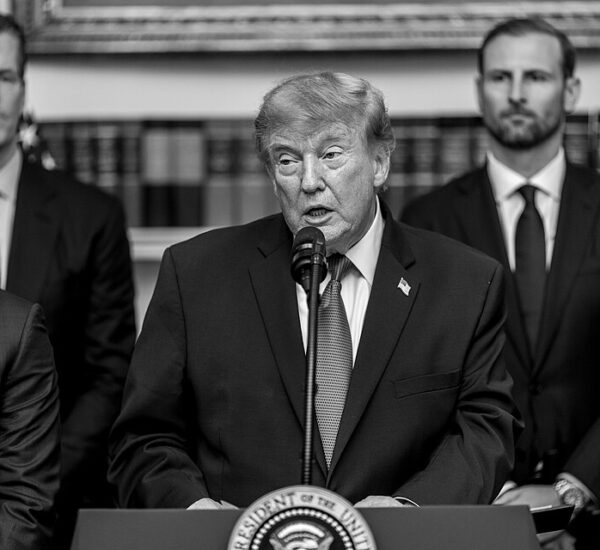
President Donald Trump is pushing a new plan to bring movie and television production—and the American jobs that come with it—back to the United States.
After meeting with Academy Award-winning actor Jon Voight, Trump called on Republicans and Democrats in Congress to consider a federal production incentive designed to make America more competitive with foreign countries that have attracted Hollywood projects.
For Trump, the issue isn’t simply about movie stars or wealthy studio executives.
It’s about American jobs.
Film and television productions employ camera operators, electricians, carpenters, drivers, costume designers, makeup artists, editors, construction crews and thousands of other workers. They also generate business for hotels, restaurants, transportation companies and local suppliers.
Trump believes more of that money should stay in America.
Trump Takes Aim at Hollywood’s Production Exodus
Trump said his meeting with Voight focused on the condition of the American entertainment industry and the growing amount of production taking place outside the country.
Voight is one of Trump’s Hollywood Special Ambassadors, along with actors Sylvester Stallone and Mel Gibson.
Trump has argued that Hollywood has lost too much business to Canada and other foreign competitors, leaving California with fewer productions than it once enjoyed.
The president now wants Washington to help reverse that trend.
His proposal centers on creating a federal incentive that would encourage studios and production companies to make movies and television programs in the United States.
Trump believes such a policy could generate enough new economic activity to offset its cost while creating jobs and increasing domestic investment.
Trump’s Message: Bring the Jobs Home
The proposal closely resembles one of Trump’s central economic arguments: America should compete for American businesses and jobs rather than watching them migrate overseas.
That philosophy has traditionally been associated with manufacturing, automobiles, energy and other major industries.
Trump is now applying it to entertainment.
The president wants lawmakers from both parties to develop legislation establishing a nationwide production incentive.
There could be political complications.
Hollywood has historically leaned heavily toward Democrats, and Trump has frequently been the target of criticism from actors and other entertainment figures.
But Trump is framing his latest initiative primarily as an economic issue rather than a cultural or partisan fight.
His argument is that Americans shouldn’t have to agree with Hollywood’s politics to recognize the value of keeping entertainment jobs in the United States.
Hollywood Means More Than Celebrities
The economic importance of film production extends far beyond actors and directors.
A major production requires an enormous network of workers and businesses.
Sets have to be constructed. Equipment has to be transported. Crews need accommodations. Food must be provided. Costumes have to be produced. Locations must be prepared. Editing and post-production work can continue long after filming ends.
That means a single large production can send money throughout a local economy.
When production moves overseas, some of those economic benefits move with it.
A federal incentive could potentially make American locations more financially attractive when studios decide where to shoot their next project.
It could also spread production beyond California.
States including Georgia, New York and New Mexico have already developed significant film and television industries, demonstrating that Hollywood production doesn’t necessarily have to take place in Hollywood itself.
Trump’s national approach could potentially encourage additional entertainment investment across the country.
Motion Picture Association Backs the Idea
Trump’s proposal has received support from one of the industry’s most influential organizations.
Motion Picture Association Chairman and CEO Charles Rivkin welcomed the possibility of a federal incentive, arguing that it could make the United States a stronger competitor for film and television projects.
Rivkin said American studios and production workers have spent generations creating entertainment consumed around the world.
He believes a national incentive could help bring additional productions into communities across all 50 states while strengthening the broader American economy.
The Motion Picture Association also indicated that it wants to work with the Trump administration and lawmakers from both parties to advance an effective proposal.
That industry support could prove important if the idea reaches Congress.
Jon Voight Has Been Working on a Hollywood Rescue Plan
Trump’s latest push follows months of work involving Voight and other entertainment industry representatives.
Before beginning his second term, Trump announced that Voight, Stallone and Gibson would serve as special representatives advising him on Hollywood.
Trump said their mission would be to help restore an industry that had lost business to foreign competitors.
Voight subsequently became involved in developing a more comprehensive proposal.
In May 2025, Voight and special adviser Steven Paul presented Trump with recommendations following discussions with studios, streaming companies, unions, guilds and other entertainment organizations.
Their proposal went considerably further than a single tax incentive.
It reportedly included potential changes to federal tax provisions, international co-production agreements, infrastructure assistance, workforce training and other measures intended to make American production more competitive.
Tariffs were also discussed for certain limited circumstances.
The underlying goal was to make producing entertainment in America financially attractive enough that companies would choose the United States over foreign alternatives.
Could a Federal Hollywood Incentive Actually Work?
That will likely become the central question if Trump’s proposal advances in Congress.
Production incentives aren’t a new concept.
Governments have long used tax credits and other financial benefits to persuade studios to bring projects—and their spending—to particular locations.
A federal program, however, would operate on a much larger scale.
Supporters could argue that America is already competing against countries offering attractive incentives and that refusing to compete simply allows jobs and investment to leave the United States.
Critics could question whether taxpayers should effectively subsidize an industry associated with some of the wealthiest companies and celebrities in America.
Fiscal conservatives could also demand evidence that any federal program would produce measurable economic benefits.
Those concerns make the details especially important.
Congress would have to determine which productions qualify, how large the incentive should be and what requirements companies must satisfy.
Lawmakers could also consider provisions ensuring that companies receiving federal benefits actually employ American workers and spend a meaningful portion of their production budgets inside the United States.
Such safeguards could determine whether the proposal becomes an economic development program or simply another federal tax benefit.
An Unexpected Trump-Hollywood Alliance
There is a certain irony surrounding the proposal.
Few American institutions have had a more contentious relationship with Trump than Hollywood.
Major celebrities have spent years criticizing him, while Trump has regularly attacked what he sees as Hollywood’s liberal political culture.
Yet his administration is now considering ways to strengthen the industry’s American economic foundation.
That distinction could appeal to conservative voters who may dislike Hollywood’s politics but still believe American jobs should remain in America.
Trump’s position effectively separates the cultural argument from the economic one.
Hollywood may lean left politically, but the electricians, drivers, construction workers, camera operators and small-business owners who depend on film production still have mortgages to pay and families to support.
For Trump, those are American jobs worth fighting for.
Can Trump Bring Hollywood Back?
Hollywood isn’t going to return to its glory days simply because Washington creates another tax incentive.
Studios make production decisions based on labor costs, infrastructure, available locations, exchange rates, tax policies and numerous other considerations.
But a competitive federal incentive could change the calculation.
Trump’s challenge will be convincing Congress that the potential economic payoff justifies the cost.
The fact that industry leaders are supporting the concept could give the proposal additional momentum.
It also presents Trump with an unusual opportunity for bipartisan cooperation.
Democrats representing California and other states with major entertainment industries have an obvious interest in protecting production jobs. Republicans could support the proposal as part of a broader effort to bring American jobs and investment back from overseas.
Whether those interests are strong enough to overcome Washington’s political divisions remains to be seen.
But Trump’s objective is clear.
He wants movies made for American audiences to create more American jobs.
And after years of watching productions move abroad, Trump believes it’s time for the United States to compete for them again.
His goal is simple: bring the cameras, investment and jobs home—and make Hollywood great again.