Seneca Nation Calls Out Trump
President Donald Trump’s decision to rename Lake Ontario as “Lake America” is drawing opposition from the Seneca Nation, whose president argues the executive action ignores centuries-old treaty obligations and the history of Indigenous nations surrounding the Great Lakes.
Seneca Nation President J. Conrad Seneca called on Trump Friday to reverse the executive order, contending that the decision conflicts with the spirit of the Treaty of Canandaigua, a historic agreement reached between the United States and the Haudenosaunee Confederacy in 1794.
The dispute adds another dimension to an already heated debate over Trump’s decision to give the massive Great Lake a distinctly American name at a time when relations between Washington and Ottawa have become increasingly strained.
Seneca Nation Raises Treaty Concerns
The Seneca are one of the six nations belonging to the Haudenosaunee Confederacy, whose history in the region stretches back long before the modern United States and Canada were established.
According to Seneca, changing the lake’s name without considering that history disregards the cultural heritage and sovereignty of the Indigenous nations with longstanding ties to the area.
He accused the administration of showing disrespect toward Indigenous communities on both sides of the U.S.-Canada border and argued that a president does not have the authority to claim ownership over their culture.
Seneca characterized the executive action as an attempt to erase part of that history and said it runs counter to the lasting friendship established between the federal government and the Haudenosaunee more than two centuries ago.
At the center of his argument is the Treaty of Canandaigua.
The agreement was signed in Canandaigua, New York, in 1794 by representatives of the Six Nations and Timothy Pickering, who negotiated on behalf of President George Washington.
The treaty helped establish peaceful relations between the young United States and the Haudenosaunee Confederacy. Seneca pointed specifically to treaty language describing Seneca territory in relation to Lake Ontario as evidence of the lake’s longstanding significance to his people.
Trump Orders Federal Government To Adopt “Lake America”
Trump signed the executive order Thursday directing the federal government to begin using “Lake America” instead of Lake Ontario.
Under the order, Interior Secretary Doug Burgum and the U.S. Board on Geographic Names are instructed to update the federal Geographic Names Information System within 30 days. Federal maps, records and other government materials would subsequently reflect the new designation.
The administration’s order points to the lake’s geography, including the location of its deepest waters, in making the case for the new American designation.
The president also appeared to embrace the symbolism surrounding the change.
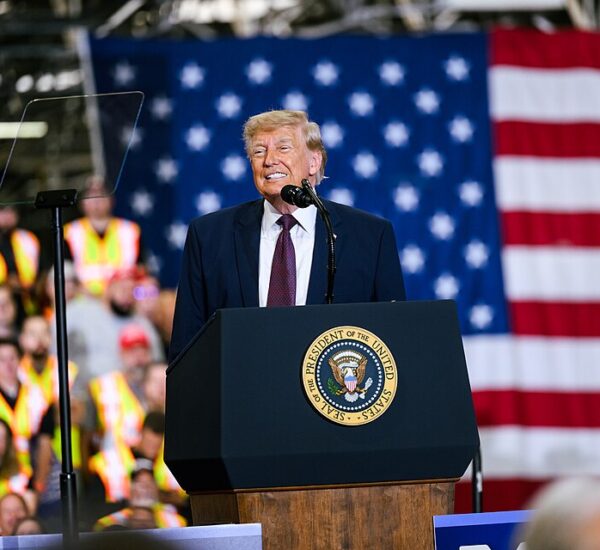
Speaking from the Oval Office while signing the measure, Trump joked that the country now has a gulf and a lake bearing the America name and suggested an ocean could be next.
For Trump supporters, the move may fit with the president’s broader “America First” approach and his willingness to challenge traditional conventions. Critics, however, argue that renaming an internationally shared body of water creates unnecessary friction while raising historical and diplomatic questions.
Importantly, the president’s executive order applies to the U.S. federal government. It does not compel Canada or international organizations to stop using the name Lake Ontario.
That means Americans could increasingly encounter different names for the same body of water depending on whether they are viewing American federal materials, Canadian documents or international maps.
Name Change Comes Amid U.S.-Canada Trade Fight
The controversy is unfolding against the backdrop of a much larger disagreement between the United States and Canada.
Trump’s decision followed deteriorating trade negotiations between the neighboring countries and the administration’s decision to impose 50 percent tariffs on approximately $20 billion in Canadian products.
Ottawa answered with retaliatory duties of its own, further escalating economic tensions between two countries that have historically maintained one of the world’s closest trading relationships.
That economic backdrop makes Trump’s decision particularly significant. What might otherwise have been treated primarily as a geographic naming dispute has instead become part of the broader political confrontation between Washington and Ottawa.
New York Governor Rejects Trump’s New Name
Democratic New York Gov. Kathy Hochul quickly made clear that her administration would not embrace the president’s terminology.
Because New York shares an extensive border with the lake, the dispute has immediate relevance for residents, communities and businesses across the northern part of the state.
Hochul publicly declared that New York would continue rejecting the “Lake America” designation, putting the Democratic governor directly at odds with the Trump administration.
Canadian Prime Minister Mark Carney also objected.
Carney emphasized that the lake’s historic Indigenous name existed before either Canada or the United States became modern nations. He said Canadians intend to continue referring to the body of water as Lake Ontario regardless of Washington’s decision.
Lake Ontario Name Has Centuries Of History
The name “Ontario” itself has Indigenous origins.
It is generally traced to a Wendat, also known as Huron, term associated with the lake and commonly interpreted along the lines of “lake of shining waters.”
The lake eventually gave its name to Canada’s province of Ontario, which was formally established in 1867.
That long history is now at the center of the Seneca Nation’s objections.
Seneca wants Trump to withdraw the executive order and preserve the Lake Ontario name, arguing that its historical and cultural significance should outweigh the administration’s desire to adopt a new federal designation.
So far, however, the Seneca Nation has not publicly announced plans to challenge the executive order in court.
Debate Over “Lake America” Is Likely Far From Over
The growing controversy leaves Americans with competing arguments involving presidential authority, national pride, Indigenous history, international relations and the federal government’s ability to determine the names appearing on official U.S. maps.
Trump’s supporters may view “Lake America” as another unapologetic expression of his America First agenda, particularly during a bitter trade dispute with Canada. Opponents see the change as unnecessary and argue that generations of history should not be discarded for political symbolism.
The Seneca Nation’s intervention could ensure that the discussion extends beyond the ongoing disagreement between Trump, Canadian officials and Democratic leaders.
Whether the administration ultimately stands firm or faces enough political, diplomatic or legal pressure to reconsider remains to be seen.
For now, federal agencies are moving toward implementing Trump’s “Lake America” designation, while Canada, New York’s Democratic governor and the Seneca Nation are making it clear they have no intention of quietly accepting the change.