Canada Comes To Trump’s Table?
Canada is signaling that it may be ready to return to the negotiating table with President Donald Trump’s administration as the escalating U.S.-Canada trade dispute begins to show signs of a possible breakthrough.
The development comes after Washington moved to ease concerns surrounding Canada’s protections for French-language and domestic cultural content — an issue Canadian officials had identified as one of the sticking points in negotiations.
While major disagreements over tariffs, automobiles, steel and aluminum remain unresolved, the latest shift could provide an opening for Trump and Canadian Prime Minister Mark Carney to restart talks aimed at ending a trade battle affecting businesses and workers on both sides of the border.
Canada Opens Door to New Trump Trade Talks
Dominic LeBlanc, Canada’s minister responsible for U.S. trade, said Thursday that comments from U.S. Trade Representative Jamieson Greer could help revive negotiations that fell apart last week.
LeBlanc welcomed indications that Washington was backing away from concerns involving Canadian rules designed to promote French-language and Canadian programming.
He said Canada now wants additional clarification on other American demands before the two governments can move toward what he described as a mutually beneficial agreement that also respects Canadian sovereignty.
The change in tone is significant after several days of increasingly sharp rhetoric between Washington and Ottawa.
Trump’s administration imposed new tariffs on Canadian products, while Carney’s government responded with retaliatory duties on American goods.
Carney has characterized the escalating dispute in dramatic terms, comparing the confrontation to an economic war.
Trump Administration Rejects French-Language Dispute
One of the more unusual disagreements surrounding the negotiations involved Canadian protections for French-language and domestically produced programming.
The issue is especially sensitive in Canada, where both English and French enjoy constitutional protections.
Carney previously indicated that American objections to Canadian cultural policies contributed to the collapse of negotiations.
Trump administration officials are disputing that version of events.
Greer acknowledged that regulations involving Canadian and French-language content on streaming platforms had been discussed. But he made clear that Washington did not consider the issue important enough to sacrifice a favorable trade agreement.
Greer said the Trump administration recognizes the cultural and political importance of the French language in Canada and suggested it was never intended to become a major obstacle to a broader deal.
Commerce Secretary Howard Lutnick was even more forceful in rejecting the controversy.
Speaking with reporters Thursday, Lutnick argued that Washington was not interested in telling French-speaking Canadians how they should speak or regulate their culture.
His message was straightforward: the Trump administration’s trade concerns are focused elsewhere.
Steel, Aluminum and Automobiles Remain Major Issues
Removing the language controversy from the negotiations does not mean the trade dispute is over.
Far more economically significant disagreements remain.
Steel, aluminum and automobiles have emerged as major battlegrounds as Trump continues his effort to reshape America’s trading relationships and strengthen domestic manufacturing.
These industries are particularly important because the American and Canadian economies have been deeply interconnected for decades.
Automobile production is one example. Parts and materials can cross the U.S.-Canada border multiple times during the manufacturing process before a completed vehicle reaches a dealership.
That means tariffs designed to pressure Canada can also create additional expenses or supply-chain complications for American companies.
For the Trump administration, the objective is to secure trade terms that officials believe will better protect American workers, manufacturers and industries.
For Canada’s government, the challenge is defending its own industries without inflicting unnecessary economic damage at home.
Canada Backs Down on Part of Retaliatory Tariffs
There are already signs that economic realities may be forcing Ottawa to reconsider parts of its strategy.
Canada has removed American seafood from a list of U.S. products that were scheduled to face additional tariffs beginning Sept. 8.
The reversal came after Canadian businesses raised concerns about the potential consequences.
Nova Scotia seafood buyer Chris Poirier criticized Carney’s original approach, arguing that expanding the dispute into the fishing industry could ultimately hurt businesses that depend on cross-border commerce.
A spokesman for Canadian Finance Minister François-Philippe Champagne said the government changed its tariff list to strengthen Canadian industries and better align Ottawa’s response with American tariffs.
The reversal highlights one of the biggest risks of any prolonged trade war.
Retaliatory tariffs may be designed to punish another country, but businesses and consumers at home can also feel the consequences.
American Workers Have a Major Stake in the Outcome
The dispute matters far beyond the halls of government in Washington and Ottawa.
The United States and Canada have one of the world’s largest bilateral trading relationships, with enormous amounts of goods and services moving across the border.
American manufacturing, agriculture, energy, transportation and other industries are closely connected to Canadian trade.
That gives Trump significant economic leverage over Ottawa, but it also means a prolonged confrontation could create complications for American companies that purchase Canadian materials or sell products to Canadian customers.
Finding an agreement that protects U.S. economic interests while preserving stable cross-border commerce could therefore become an important test for the administration’s trade strategy.
Trump Adds Another Twist With “Lake America”
Trade negotiations are not the only source of tension between the neighboring countries.
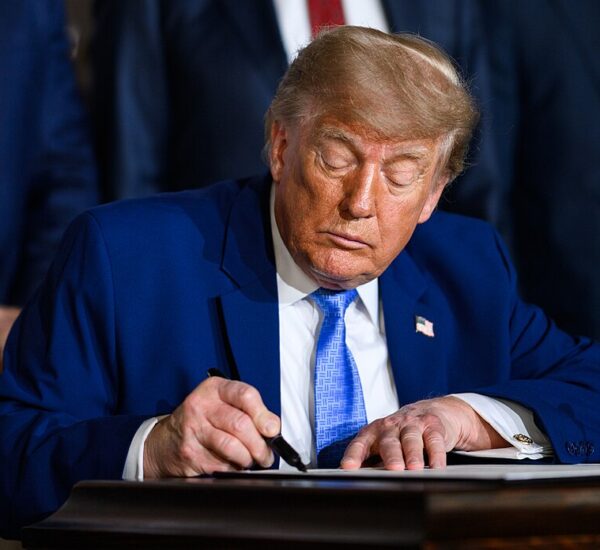
Trump added another wrinkle Thursday when he signed an executive order directing the United States to refer to Lake Ontario as “Lake America.”
The enormous lake is shared by the United States and Canada, meaning Washington cannot require Canada to adopt the American government’s preferred terminology.
Nevertheless, the move adds another symbolic element to an already strained relationship between Trump and Carney.
It also comes as the president continues pushing an “America First” approach toward trade and other international issues.
Could Trump and Canada Finally Reach a Deal?
Despite the confrontational rhetoric, the latest developments suggest both governments may have reasons to return to negotiations.
Canada’s decision to remove American seafood from part of its retaliatory tariff package shows Ottawa is willing to make adjustments when domestic industries face potential harm.
At the same time, Washington’s clarification regarding French-language protections removes an issue that threatened to become a politically charged obstacle.
But the most difficult questions remain unresolved.
Steel, aluminum, automobiles, tariffs and broader market access could ultimately determine whether Trump and Carney can reach an agreement.
For American workers and businesses, the stakes are substantial.
A deal favorable to the United States could provide Trump with another victory for his broader effort to renegotiate America’s economic relationships and strengthen domestic industry.
A prolonged tariff battle, however, could bring additional uncertainty for companies and consumers on both sides of the border.
For now, Canada’s latest comments suggest the door to negotiations is open again.
Whether Trump walks through that door — and what concessions Washington demands in return — could determine the next chapter in one of America’s most important trading relationships.