Canada hasn’t been a good US ally.
President Donald Trump’s trade battle with Canada is heating up again, and Vice President JD Vance says American farmers and businesses have good reason to be frustrated.
During a Monday appearance in Brewer, Maine, Vance accused Canada of maintaining trade policies that give some foreign competitors better treatment than American producers — despite Canada’s decades-long economic and security partnership with the United States.
The vice president pointed directly to China while arguing that Americans should expect better treatment from one of their closest neighbors.
Vance argued that Canada gives Chinese imports more favorable treatment than products coming from Maine, calling the situation unreasonable and saying the administration has demanded that Ottawa put an end to the practice.
His comments come as U.S.-Canada trade negotiations face renewed uncertainty and Trump threatens additional tariffs if the two countries cannot resolve their differences.
Vance Says Canada Deal Fell Apart at Last Minute
According to Vance, the Trump administration believed it was close to reaching a new trade agreement with Canada before negotiations broke down.
“I frankly thought we had a deal,” Vance said.
The vice president blamed the collapse on what he characterized as unreasonable demands introduced by Canadian officials late in the negotiations.
Vance said the administration remains willing to make a deal, but only if Washington believes American workers, farmers and businesses are being treated fairly.
“I think that we should have a deal,” he said.
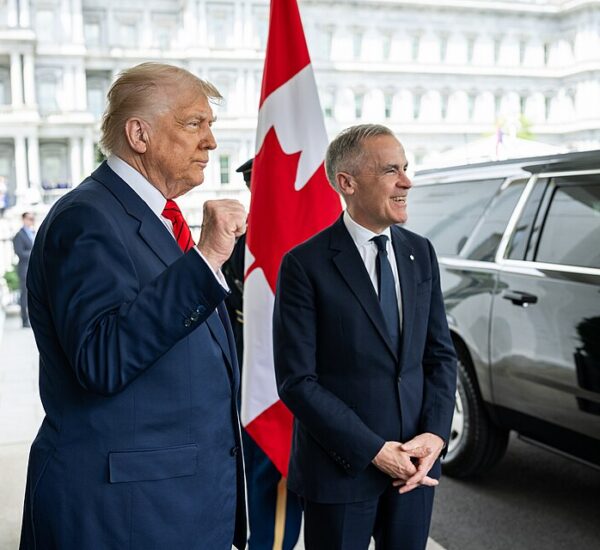
Vance then delivered a direct message to Canadian Prime Minister Mark Carney, arguing that the days of accepting trade arrangements the administration considers one-sided are coming to an end.
For Trump and his allies, the dispute fits into a much larger economic strategy centered on tariffs, domestic manufacturing, American agriculture and reducing the country’s dependence on foreign suppliers.
Trump Turns Up Pressure on Canada
Carney announced Friday that Canada was suspending negotiations, raising the possibility of another prolonged trade confrontation between the neighboring countries.
Trump responded by threatening steep tariffs on Canadian products, including automobiles, auto parts and steel.
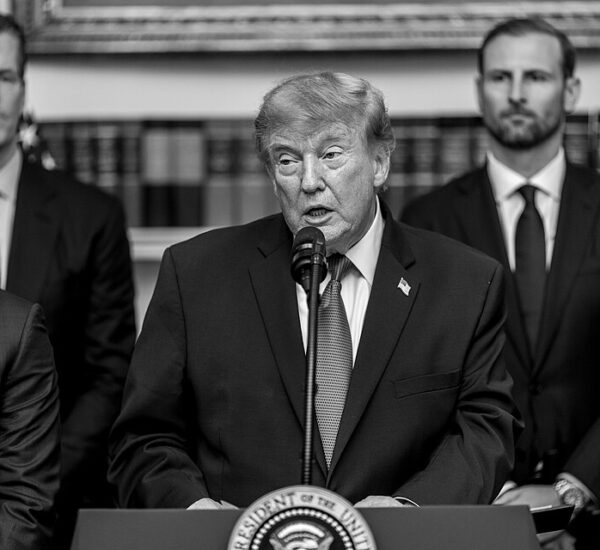
“Canada has been ripping off the United States of America for years,” Trump wrote on Truth Social.
The president specifically criticized Canada’s treatment of American farmers and agricultural products, arguing that existing policies have made it unnecessarily difficult for U.S. producers to compete north of the border.
The administration has increasingly used tariffs as leverage to challenge foreign trade barriers and encourage companies to manufacture more products inside the United States.
That strategy has been controversial, with supporters arguing that tariffs can defend American industries from unfair foreign competition while critics warn that businesses and consumers can ultimately face higher costs.
Why Maine Is at the Center of the Fight
Vance made his remarks during a visit to Compotech, a defense technology manufacturer in Brewer.
Maine has particular reason to pay attention to the dispute.
The state shares a long border with Canada, and businesses on both sides depend heavily on cross-border commerce. Agriculture, manufacturing, forestry, energy and transportation can all be affected when relations between Washington and Ottawa deteriorate.
“We’re very mindful of the fact that Maine is a border state with Canada,” Vance said.
The vice president said the administration’s objective is not simply to punish Canada with tariffs. Instead, he portrayed Trump’s strategy as an attempt to negotiate more balanced terms for American producers.
“What we’re trying to do here is just make sure that Maine actually gets a fair deal,” Vance said.
Vance Draws a Surprising Comparison With China
Vance then made one of his sharpest arguments of the day.
The vice president said both Canada and China have been major sources of trade barriers affecting American products.
But he emphasized that Washington expects aggressive economic competition from Beijing.
Canada, he argued, should be different.
Vance said tough trade behavior is hardly surprising from China, given its status as America’s leading economic rival, but argued that similar treatment is far less acceptable coming from a close ally like Canada.
That distinction goes to the heart of the Trump administration’s complaint.
China is widely viewed in Washington as America’s primary long-term economic competitor. Canada, by contrast, is a NATO ally, a major U.S. trading partner and one of America’s closest neighbors.
Vance’s argument is that such a close ally should not maintain policies that Washington believes place American producers at a disadvantage.
Vance Makes ‘51st State’ Slip
The vice president also produced a memorable moment when he accidentally referred to Canada as a “state.”
Vance briefly referred to Canada as a state before correcting himself, joking that the verbal slip was genuinely accidental.
The comment immediately brought to mind Trump’s repeated jokes about Canada becoming America’s “51st state.”
Vance quickly corrected himself and turned to a much more serious subject: defense spending.
The vice president accused Canada of failing to invest enough in its military while benefiting from the security provided by the United States.
“Canada is a country that has underinvested in its military,” Vance said.
He argued that America’s defense relationship with Canada makes the trade dispute particularly frustrating.
From Vance’s perspective, the United States helps provide security for its northern neighbor while American businesses simultaneously encounter Canadian trade restrictions.
Canadian Dairy Tariffs Draw Vance’s Attention
American farmers were another major focus of Vance’s remarks.
The vice president specifically highlighted dairy products and the unusually high tariffs that can apply after U.S. exports exceed Canada’s established tariff-rate quotas.
Vance said Maine dairy farmers exporting their products to Canada could face tariffs reaching as high as 250%.
The details are important.
Canada’s dairy system allows specified quantities of certain U.S. products to enter under preferential tariff arrangements established through the United States-Mexico-Canada Agreement, or USMCA.
However, once those quotas are exceeded, dramatically higher tariffs can apply.
Some Canadian over-quota dairy tariff rates exceed 200%, depending on the product.
That distinction means American dairy products are not universally subjected to a 250% tariff simply for entering Canada. The highest rates generally apply after specific import quotas have been reached.
Still, those tariffs have become a powerful example for Trump officials arguing that American agriculture faces significant barriers in foreign markets.
Vance contrasted the situation with Canadian products entering the United States.
“How is it fair to the farmers of Maine that they pay 250% when the Canadian farmers pay nothing?” he asked.
Trump Administration Targets Canadian Trade Policies
The dairy dispute is not merely political rhetoric.
The Trump administration has formally challenged Canadian trade practices involving dairy products and motor vehicles, arguing that certain policies disadvantage American commerce.
The White House has maintained that Canada’s dairy tariff-rate quota system can provide more favorable treatment to certain European products than comparable American goods.
The administration has also challenged Canadian policies affecting U.S.-made vehicles.
For Trump, these disputes support his broader argument that “free trade” only works when American companies receive comparable access to foreign markets.
It is a message likely to resonate with farmers and manufacturing workers who have watched factories move overseas and foreign competition increase over the past several decades.
Vance Warns About Chinese Goods
Vance also raised another issue that reaches beyond Canada itself.
He accused Canada of potentially providing a pathway for Chinese products to enter the North American marketplace.
“We know that Canada allows itself to be used as a back door for Chinese goods,” Vance said.
Preventing Chinese manufacturers from circumventing American trade restrictions has become an increasingly important part of Trump’s economic agenda.
The administration has argued that simply imposing tariffs directly on Chinese products is not enough if those goods can be rerouted, processed or relabeled through other countries before reaching American consumers.
That makes Canada’s relationship with China another potential sticking point in negotiations.
What Happens Next With Trump’s Canada Trade Fight?
Despite the tough language, Vance did not suggest that negotiations are permanently over.
“I think that we should have a deal,” the vice president said. “We expect fairness in our trade policy.”
The question now is whether Washington and Ottawa can return to the negotiating table before the dispute escalates further.
Trump has repeatedly demonstrated that he is willing to use tariffs as negotiating leverage, particularly when he believes American manufacturers, farmers or workers are being treated unfairly.
Canada, meanwhile, faces its own political and economic pressures to protect domestic industries.
For Americans, the stakes are significant.
A prolonged trade confrontation could affect agriculture, automobiles, steel, manufacturing and other industries that depend on commerce between the two countries. Consumers could also feel the effects if tariffs increase the cost of imported goods or materials.
But Vance’s message in Maine was unmistakable: being a longtime American ally does not automatically exempt Canada from Trump’s push for tougher trade terms.
The administration says it wants the same basic principle applied to China, Canada and every other trading partner — if another country places barriers in front of American products, the United States is prepared to respond.
And with Trump increasing the pressure on Ottawa, the decades-old economic relationship between the United States and Canada could be entering a very different era.