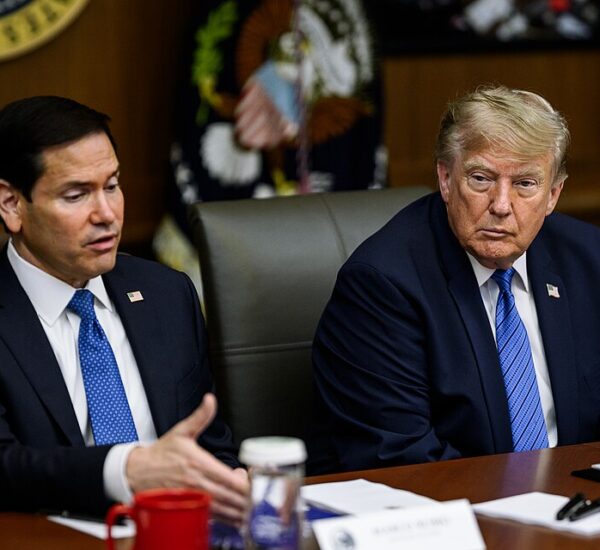
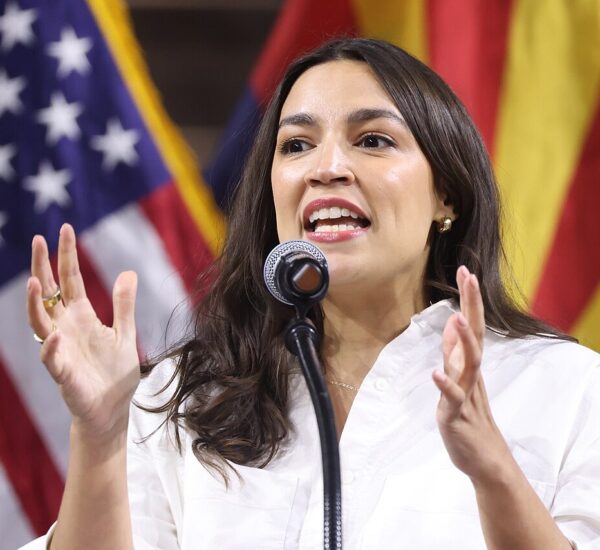
AOC is refusing to back down.
Rep. Alexandria Ocasio-Cortez is once again at the center of a heated political and cultural debate, this time after the New York Democrat publicly documented her decision to freeze her eggs and then fired back at conservative critics questioning her choices.
The outspoken progressive congresswoman says she has no regrets about making the personal process public, despite the criticism that followed.
Ocasio-Cortez, 36, has argued that the reaction demonstrates a double standard facing women in public life. Some conservatives, however, say the controversy raises legitimate questions about the messages American culture sends younger women about careers, marriage and starting families.
The result is another clash involving Ocasio-Cortez and parts of President Donald Trump’s MAGA coalition — and one that reaches beyond ordinary partisan politics.
AOC Says She Has No Regrets
Ocasio-Cortez addressed the criticism on Instagram after being asked whether she regretted sharing her egg-freezing experience with the public.
Her answer was straightforward.
“The answer to that simply is no,” Ocasio-Cortez said.
The congresswoman argued that she has faced intense personal scrutiny since entering national politics and believes much of the latest criticism is connected to the fact that she is a woman.
“I was born a woman, period,” she said.
Ocasio-Cortez maintained that keeping the procedure private would not necessarily have prevented criticism. Instead, she said she hopes discussing the experience can provide useful information to other women considering similar decisions.
Her response, however, has only added fuel to a much larger cultural argument.
Conservatives Debate AOC’s Decision
Ocasio-Cortez announced in early August that she was freezing her eggs and began sharing parts of the process through social media.
The decision quickly attracted attention from both supporters and critics.
Some conservative commentators argued that the episode reflects a larger cultural trend in which women are encouraged to concentrate on professional advancement during their younger years while delaying marriage and children.
That argument touches on concerns frequently raised by conservatives about declining birth rates, changing family structures and whether American institutions place enough value on marriage and parenthood.
But conservative reaction has not been unanimous.
Some voices on the right have questioned whether criticizing a woman’s personal fertility decisions is politically productive, particularly when President Trump has positioned himself as a supporter of access to fertility treatments such as IVF.
That disagreement has turned Ocasio-Cortez’s personal announcement into an unexpected debate within conservative circles as well.
AOC Fires Back at Critics
Ocasio-Cortez strongly rejected suggestions that women should make major relationship decisions simply because of concerns about age or fertility.
She suggested that such pressure could encourage women to settle for partners who are not right for them.
Her response drew additional criticism from conservatives who believe traditional marriage and family formation deserve greater encouragement in American society.
Others took a different approach, arguing that the real issue isn’t whether Ocasio-Cortez freezes her eggs but why such an intimate personal matter is being shared by a sitting member of Congress.
That distinction is important.
The disagreement now involves at least three separate questions: whether egg freezing should be controversial at all, whether society places too much emphasis on career advancement over family formation, and how much of a politician’s private life should become part of his or her public identity.
Relationship Reports Add Another Twist
The story has received additional attention because of reports surrounding Ocasio-Cortez’s longtime relationship with Riley Roberts.
Ocasio-Cortez and Roberts became engaged in 2022 after dating for years. Recent reports indicate that the engagement subsequently ended, although the relationship had largely remained outside the political spotlight.
Speculation increased after observers noticed Ocasio-Cortez had stopped regularly appearing with an engagement ring.
The congresswoman’s decision to discuss egg freezing consequently arrived at a time when questions about her personal future were already attracting media attention.
For voters, however, her relationship status may ultimately be less significant than the political argument her announcement has created.
Ocasio-Cortez Blames a Political Double Standard
Ocasio-Cortez says personal scrutiny is nothing new.
She first captured national attention in 2018 when, at age 28, she defeated longtime Democratic Rep. Joe Crowley in a stunning New York primary upset.
The victory immediately transformed her from a little-known candidate into a national progressive star.
Since then, Ocasio-Cortez has become one of America’s most recognizable members of Congress and one of the Democratic Party’s most powerful social-media personalities.
She has also become a favorite political target of Republicans.
“Ever since I was 28-years-old when I first won my primary, largely unexpectedly to the national media, I have been subject to personal scrutiny and dissection ever since,” Ocasio-Cortez said.
She contends that male politicians generally don’t experience the same degree of examination regarding their relationships, appearance and decisions about having children.
Her critics counter that Ocasio-Cortez has deliberately built an unusually public political brand and frequently uses social media to bring followers into both political and personal conversations.
That tension is likely to remain.
What Egg Freezing Actually Involves
Lost amid the political argument is the medical procedure itself.
Egg freezing, formally known as oocyte cryopreservation, allows a woman’s eggs to be retrieved and preserved for possible future use.
The process generally involves hormone medications that stimulate the ovaries, followed by an egg-retrieval procedure. Age can play an important role in future outcomes because fertility and egg quality generally decline as women get older.
Egg freezing does not guarantee a future pregnancy, but it can preserve reproductive options for some women who want to delay attempting to have children.
Ocasio-Cortez began undergoing the process during Congress’ August recess.
By choosing to discuss it publicly, she transformed what ordinarily would be an intensely private medical decision into a national conversation involving politics, family and America’s changing culture.
A Bigger Debate About America’s Families
The argument may resonate especially strongly with older Americans who have watched expectations surrounding marriage and family change dramatically over several generations.
For decades, Americans commonly married and began families at younger ages than many do today.
Economic pressures, education, career demands, housing costs and changing social expectations have all contributed to Americans delaying major milestones such as marriage and parenthood.
Conservatives increasingly argue that those changes deserve more attention.
Many believe government policy and American culture should make it easier — and more attractive — for young adults to marry, purchase homes and raise children.
Ocasio-Cortez approaches the question differently. Her argument emphasizes giving women more options over when and under what circumstances they become mothers.
Those two views help explain why one congresswoman’s personal medical decision has generated such an intense reaction.
Could This Matter in 2028?
There is also a political backdrop that cannot be ignored.
Ocasio-Cortez remains one of the Democratic Party’s most recognizable younger politicians, and speculation continues about whether she could eventually seek higher office.
That possibility becomes particularly significant as Democrats consider their future beyond the current political cycle.
President Trump has himself weighed in publicly on the possibility of Ocasio-Cortez seeking the presidency in 2028.
No presidential campaign has been announced, and speculation should not be mistaken for a candidacy.
Still, virtually everything Ocasio-Cortez does now is viewed through the lens of her potential political future.
Her willingness to discuss personal subjects could strengthen her connection with younger progressive voters who appreciate politicians appearing open and accessible.
At the same time, it gives conservatives another opportunity to contrast progressive social values with the family-oriented message many Republicans hope to emphasize.
MAGA and AOC Clash Again
Ocasio-Cortez and Trump’s MAGA movement have been political opposites for years.
The New York congresswoman has been a fierce critic of Trump and Republican policies, while conservative voters and commentators have frequently presented her as a symbol of the Democratic Party’s progressive direction.
This latest fight is different because it doesn’t revolve around taxes, immigration, government spending or foreign policy.
Instead, it centers on something much more personal: how Americans think about careers, marriage, motherhood and family.
Ocasio-Cortez says she refuses to allow criticism to prevent her from discussing her experience.
“Anyways, long story short, I’m a woman,” she said. “And I’m not going to ignore that fact when no one else does.”
Whether voters view her openness as refreshing or unnecessary will depend heavily on their own values.
But the controversy demonstrates something that has become increasingly common in American politics: even the most personal decisions can quickly become part of the country’s broader political divide.
And with Ocasio-Cortez’s political future attracting increasing attention, her latest confrontation with MAGA may not be the last.
What do you think? Should politicians share personal experiences like this with the public, or should elected officials keep private matters separate from politics?