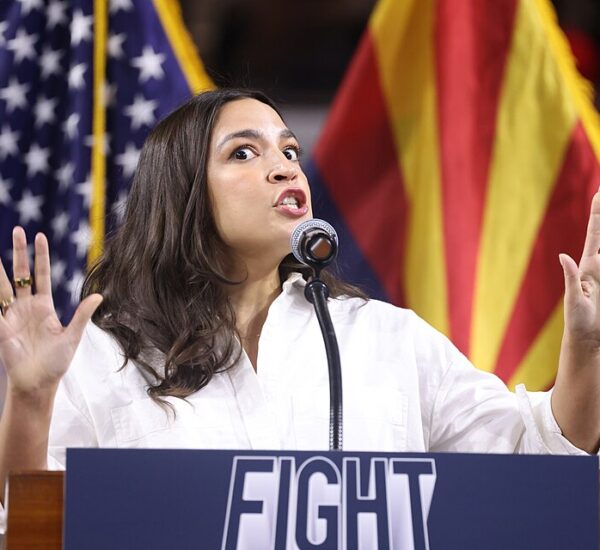
Rep. Alexandria Ocasio-Cortez has spent years calling for sweeping student loan relief and portraying education debt as a serious financial burden on working Americans.
Now, the New York Democrat’s own finances are attracting renewed attention.
Financial disclosures show that Ocasio-Cortez has reported between $15,001 and $50,000 in federal student loan debt, even after years in Congress. At the same time, the 36-year-old congresswoman recently revealed that she saved enough money to begin an egg-freezing procedure costing thousands of dollars out of pocket.
The combination is generating a new political debate surrounding one of the Democratic Party’s most recognizable progressive figures.
Is Alexandria Ocasio-Cortez facing serious financial pressure?
Or does her situation highlight a larger question about personal responsibility, student loan forgiveness and how Americans choose to spend their own money?
Despite the provocative question in the headline, the available financial disclosures do not establish that Ocasio-Cortez is literally broke. They do, however, offer voters an interesting look at the finances of a politician who has made student debt cancellation a major political issue.
AOC Reports Up To $50,000 In Student Loan Debt
Ocasio-Cortez’s congressional financial disclosure covering the 2024 calendar year listed between $15,001 and $50,000 owed to the U.S. Department of Education in student loans.
That is significant because Ocasio-Cortez has been one of Washington’s most outspoken supporters of student loan forgiveness.
During the Biden administration, she pushed for aggressive federal action to cancel education debt, arguing that millions of borrowers were being held back financially by loans accumulated while pursuing higher education.
Her own financial situation demonstrates that she remains a student loan borrower herself.
But debt tells only part of the story.
Ocasio-Cortez Also Reports Savings And Investments
The congresswoman’s disclosure also listed several financial assets.
Ocasio-Cortez reported a savings account valued between $15,001 and $50,000, while a checking account was listed between $1,001 and $15,000.
She additionally reported a brokerage account worth between $1 and $1,000, along with a 401(k) retirement account valued between $1,001 and $15,000.
Those numbers are important because congressional disclosures generally report broad ranges rather than exact balances.
As a result, nobody can responsibly calculate Ocasio-Cortez’s precise net worth from those figures alone.
They also make one thing clear: describing her as definitively “broke” would go beyond what the public records establish.
What voters can examine is how her personal financial circumstances compare with the student loan policies she has championed.
AOC Reveals Another Major Personal Expense
Interest in Ocasio-Cortez’s finances increased after she publicly revealed that she had begun freezing her eggs.
The congresswoman said she normally keeps her private life private but decided to document portions of the process publicly.
According to Ocasio-Cortez, her insurance does not cover the procedure.
She said the current round will cost approximately $8,000 to $9,000 out of pocket, in addition to roughly $100 to $400 for initial fertility testing.
She also said she had been putting money aside for years so she could afford the expense.
For many Americans — particularly families who have spent decades balancing mortgages, college tuition, retirement savings, medical expenses and household debt — that financial calculation may sound familiar.
People regularly have to decide whether to save, invest, pay down debt or spend money on an important personal priority.
Ocasio-Cortez is no different in that respect.
The political controversy comes from something else.
The Bigger Question Is Student Loan Forgiveness
Ocasio-Cortez’s decision to freeze her eggs is ultimately a personal matter.
The more relevant public-policy question involves her student loans.
If a borrower earns a substantial income and has enough financial flexibility to accumulate savings while making other major expenditures, should taxpayers eventually be responsible for canceling that person’s student debt?
For conservatives, that question gets directly to the heart of the long-running student loan forgiveness debate.
Millions of Americans have already repaid their education debt.
Others worked while attending school, attended less expensive colleges, lived at home to reduce expenses or chose careers partly based on their ability to repay what they borrowed.
Some Americans never attended college at all.
That is why broad student loan cancellation has generated such strong opposition from many Republicans and fiscal conservatives.
They argue that forgiving loans does not simply make the debt disappear. Instead, the financial burden ultimately has to be absorbed elsewhere.
Supporters of student loan relief see the issue differently. They argue that soaring education costs and years of accumulated interest can prevent borrowers from buying homes, starting families, building savings and participating fully in the economy.
Ocasio-Cortez has consistently aligned herself with that side of the argument.
Her own outstanding student loans now make the debate considerably more personal.
AOC Says She Saved For Years
Ocasio-Cortez has been open about her financial journey.
Before winning her congressional seat in 2018, she famously worked as a bartender and waitress in New York.
While discussing egg freezing, she reflected on that period of her life and explained that paying thousands of dollars for such a procedure once would have seemed financially overwhelming.
She said years of saving eventually allowed her to make the decision.
That is a relatable experience for many Americans.
Saving for an expensive goal often requires discipline, patience and trade-offs.
But it may also lead some voters to ask why the same principle should not apply to paying down student loans.
If Americans are expected to save for a house, retirement, medical bills and other major expenses, should education debt be treated differently?
That question is larger than Ocasio-Cortez.
It concerns the fundamental disagreement between conservatives and progressives over debt, government assistance and individual financial responsibility.
Personal Choice Versus Public Policy
There is an important distinction that should not get lost in the political debate.
Ocasio-Cortez’s fertility decisions are hers to make.
She has explained that women pursue egg freezing for numerous reasons, including medical circumstances, fertility concerns and the desire to preserve the possibility of having children later in life.
Americans can have different opinions about those choices without turning a personal medical decision into the central political issue.
The taxpayer question is different.
Ocasio-Cortez is an elected federal official who has actively promoted policies involving hundreds of billions of dollars in student debt.
That makes scrutiny of her position on student loan forgiveness legitimate political debate.
The important comparison is therefore not whether she should spend thousands of dollars freezing her eggs.
It is whether someone who has the ability to accumulate savings and pay for major personal expenses should also qualify for taxpayer-backed student loan cancellation.
From Bartender To National Progressive Leader
Ocasio-Cortez’s financial circumstances have changed dramatically since her days working in the service industry.
First elected to Congress in 2018, she rapidly became one of the best-known Democrats in America.
Her enormous social media following and national fundraising operation have helped transform her from a first-time congressional candidate into a major figure in progressive politics.
She has used that influence to promote ambitious proposals involving climate policy, health care, taxation and student loan forgiveness.
Those positions have made her enormously popular with many progressive voters — and equally controversial among conservatives.
Her financial disclosure is therefore more than celebrity curiosity.
It gives voters another opportunity to examine whether the policies promoted by Washington politicians make sense when applied to real-world financial decisions.
Is Ocasio-Cortez Actually Broke?
Based on the publicly disclosed information, there is no justification for stating as fact that Ocasio-Cortez is broke.
She has reported student loan debt, but she has also disclosed savings, retirement assets and other financial accounts.
And because congressional financial disclosures use ranges, they cannot provide an exact accounting of her wealth.
But that doesn’t make the story politically insignificant.
Quite the opposite.
Ocasio-Cortez’s circumstances illustrate something millions of Americans understand very well: having debt does not necessarily mean someone has no money.
A person can simultaneously carry debt, maintain savings, contribute toward retirement and spend money on other priorities.
The real disagreement is over who should ultimately be responsible for that debt.
A Question Taxpayers May Want Answered
For Americans over 50, the student loan debate can be particularly frustrating.
Many spent decades paying their own bills while simultaneously raising children, paying mortgages, saving for retirement and helping aging parents.
Some also helped their children pay for college.
Others are still paying education-related debt themselves.
Those Americans may reasonably wonder why responsible borrowers who repaid what they owed should receive no comparable benefit if Washington eventually cancels debt for someone else.
Progressives argue that student loan forgiveness would provide economic relief to borrowers and address deeper problems with the cost of higher education.
Conservatives counter that government cancellation risks rewarding borrowing while leaving taxpayers responsible for the consequences.
Ocasio-Cortez’s own financial disclosure puts a recognizable face on that disagreement.
She has student loan debt.
She has savings and other financial assets.
She has also demonstrated that she can save for an expensive personal priority when that priority matters enough to her.
None of those facts prove that she is “broke.”
But together they raise a much more important question than the headline:
If Americans have the financial ability to save thousands of dollars for major personal expenses, should taxpayers ever be expected to erase their student loan debt — or should borrowers ultimately be responsible for paying back what they borrowed?