Trump Clears Up Confusion On Aircraft Carriers
President Donald Trump pushed back Friday against growing criticism surrounding the lengthy deployment of the USS Abraham Lincoln, rejecting concerns raised by Democratic lawmakers about conditions facing American sailors serving aboard the aircraft carrier in the Middle East.
The Lincoln has now spent more than 260 days on deployment, an unusually long stretch that has generated questions about the strain placed on sailors, their families and the massive warship itself.
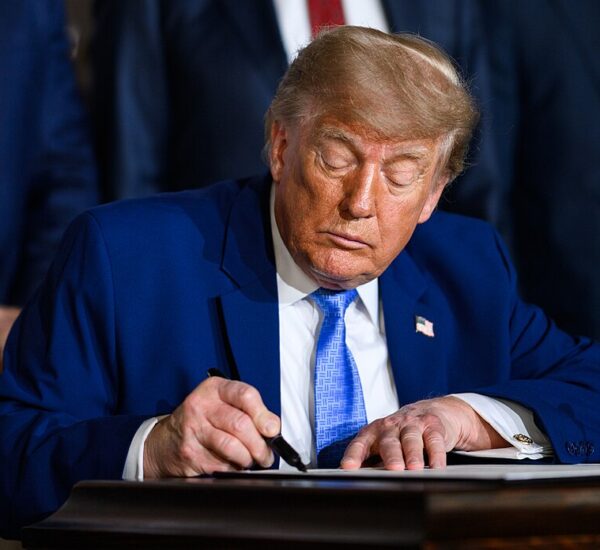
Trump addressed the controversy while speaking with reporters before traveling to New York, where he was scheduled to highlight declining violent crime rates across the United States.
Asked about concerns surrounding the Lincoln’s extended deployment, Trump emphasized that a replacement carrier is preparing to take over.
“That ship is moving right now, or very shortly, and it’s being replaced with another very similar ship,” Trump said.
Trump also dismissed the suggestion that the deployment had gone on too long, saying it was “not nearly long enough.”
His remarks quickly intensified a political debate over the treatment of U.S. service members as the American military maintains a significant presence in the Middle East.
Democrats Demand Answers About USS Abraham Lincoln
Several Democratic lawmakers are pressing the Pentagon for more information about conditions aboard the USS Abraham Lincoln.
Sens. Richard Blumenthal of Connecticut and Ruben Gallego of Arizona are among those seeking greater accountability from military leaders amid reports involving the crew’s well-being, supplies and the consequences of an extended deployment.
Defense Secretary Pete Hegseth has strongly disputed the way the situation has been portrayed.
Hegseth said Thursday that conditions aboard the aircraft carrier had been “completely misrepresented,” putting the Trump administration at odds with critics who argue that more information should be made public.
The dispute has created another partisan battle in Washington, but behind the politics is a serious issue affecting thousands of American military personnel and their families.
Extended deployments can mean spending holidays, birthdays and other major family milestones thousands of miles from home. They can also place additional demands on ships, aircraft and equipment that must remain operational for long periods.
Democratic Congressman Attacks Trump Over Remarks
Rep. Jason Crow, D-Colo., responded sharply to Trump’s comments.
Crow, an Army veteran who served in Iraq and Afghanistan before entering Congress, accused Trump on social media of not caring about American service members or their families.
The White House and military officials have rejected the broader narrative that sailors aboard the Lincoln are being abandoned or ignored.
U.S. Central Command, which oversees American military operations across the Middle East, has also pushed back against reports describing deteriorating conditions aboard the carrier.
That disagreement is important because some of the most serious allegations surrounding the Lincoln remain disputed.
Navy Responds to Mental Health Concerns
Reports about the mental health of sailors aboard the USS Abraham Lincoln have attracted particular attention.
The Navy said it has “not observed an increase in suicidal ideations or attempts aboard the ship.”
Officials have not released detailed statistics, citing operational security requirements and the privacy of individual patients.
The Navy has also confirmed an incident involving a sailor who went overboard in early August.
According to a Navy official, the sailor was quickly recovered from the water, received treatment from the ship’s medical department and was later transferred off the carrier for additional care.
Officials have not publicly said whether the incident is being investigated as a suicide attempt.
The distinction matters because reports involving mental health and suicide require careful treatment, particularly when officials have not publicly established the circumstances surrounding an individual incident.
USS George Washington Expected to Replace Lincoln
For sailors aboard the Lincoln and their families back home, relief may finally be getting closer.
The USS George Washington departed Da Nang, Vietnam, last week and is expected to replace the USS Abraham Lincoln in the Middle East.
The transition would allow the Lincoln to move toward completing a deployment that has stretched beyond eight months.
Aircraft carriers are essentially floating military bases. Thousands of sailors work aboard them, supporting flight operations, maintenance, navigation, logistics, security, medical care and numerous other responsibilities necessary to keep the ship functioning around the clock.
A carrier deployment therefore affects far more than military strategy. It also affects thousands of American families waiting for their loved ones to return home.
U.S. Military Maintains Pressure on Iran
The controversy comes as the Trump administration continues dealing with Iran and the security of the Strait of Hormuz.
Although direct hostilities between the United States and Iran have eased in recent weeks, American forces remain heavily involved in the region.
The Navy has reimposed a blockade involving Iranian ports around the Strait of Hormuz, a strategically important waterway for international energy shipments and global commerce.
Hegseth has said the United States has the military capability to maintain the blockade “indefinitely.”
That statement raises a larger question: How long will American forces be required to maintain their current operational tempo in the Middle East?
The administration has not announced a definitive timetable for winding down the broader conflict.
Military Readiness and Supporting American Sailors
For many conservative Americans, there are two important considerations in this debate.
The United States must maintain a military capable of protecting the country, defending American interests and responding to threats abroad. At the same time, Washington has a responsibility to make sure the sailors, soldiers, airmen and Marines carrying out those missions receive adequate resources and support.
Those goals do not have to compete with one another.
A strong military ultimately depends on the readiness and well-being of the men and women serving in uniform.
Long deployments have always been part of military service, particularly during periods of heightened international tension. But unusually extended deployments naturally generate questions about personnel, equipment, maintenance and military readiness.
Those questions deserve factual answers rather than political speculation from either party.
Political Battle Over Lincoln Likely to Continue
Democrats are likely to continue demanding information from the Pentagon about the Lincoln’s deployment, while Hegseth, Navy officials and U.S. Central Command have disputed reports suggesting conditions aboard the carrier have reached a crisis point.
Trump, meanwhile, appears unwilling to accept the premise that the lengthy deployment represents evidence of a broader failure.
The arrival of the USS George Washington could soon change the discussion by allowing the Lincoln to begin leaving the region.
For the sailors aboard the carrier and the families waiting for them at home, that transition may ultimately matter far more than the political arguments taking place in Washington.
The controversy nevertheless raises important questions about America’s Middle East strategy, military readiness and the sacrifices demanded of U.S. service members during prolonged overseas operations.
As the Trump administration determines its next moves toward Iran, Americans will be watching both sides of that equation: whether the United States can continue projecting military strength abroad while making sure the men and women responsible for that mission are properly supported at home and at sea.