Republican Says Common Sense Will Prevail
Wisconsin’s race for governor is quickly becoming one of the most closely watched political contests of the 2026 election, with Republicans increasingly confident that Rep. Tom Tiffany can capture the governor’s mansion by focusing on affordability, government spending, public safety and other kitchen-table concerns.
Rep. Bryan Steil, R-Wis., is among the Republicans predicting a Tiffany victory this November.
Following Tuesday’s primary elections, Steil argued that Wisconsin voters will face a clear choice between Tiffany’s conservative approach and the policies offered by Democratic nominee David Crowley.
The stakes are considerable. Democratic Gov. Tony Evers is retiring, creating an open-seat contest in a state known for extremely competitive statewide elections.
For Wisconsin families concerned about taxes, household expenses, retirement security and the direction of state government, the race could become one of the biggest political battles of the fall.
Bryan Steil Predicts Tom Tiffany Victory
During a Wednesday appearance on Newsmax’s “National Report,” Steil said turnout will be critical to Republican hopes of winning the Wisconsin governor’s race.
Steil described Tiffany’s platform as centered on “common sense” and argued that Republicans have an opportunity to draw a sharp contrast with Democrats.
In Steil’s view, the winning formula is straightforward: motivate conservative voters while reaching Wisconsin residents who may be dissatisfied with progressive policies.
He predicted Republicans will successfully bring their voters to the polls.
Steil also argued that many Wisconsin residents are searching for practical solutions rather than a larger expansion of progressive government policies.
That argument is likely to become an important theme of Tiffany’s general-election campaign.
Tiffany Cruises to Republican Nomination
Tiffany easily won Wisconsin’s Republican gubernatorial primary Tuesday, allowing the GOP to move quickly toward the general election.
He will face Crowley in November for the right to succeed Evers.
The open governor’s seat gives Republicans an important opportunity in a state that frequently determines major elections by narrow margins.
Wisconsin has repeatedly demonstrated that relatively small movements among independent, suburban and working-class voters can have major political consequences.
That makes issues such as inflation, taxes, jobs, government spending and public safety particularly important as both candidates attempt to expand support beyond their parties’ traditional bases.
David Crowley Wins Close Democratic Primary
Crowley emerged from a much tighter Democratic contest.
The Milwaukee County executive narrowly defeated democratic socialist Francesca Hong, blocking what could have been another significant victory for the Democratic Party’s progressive wing.
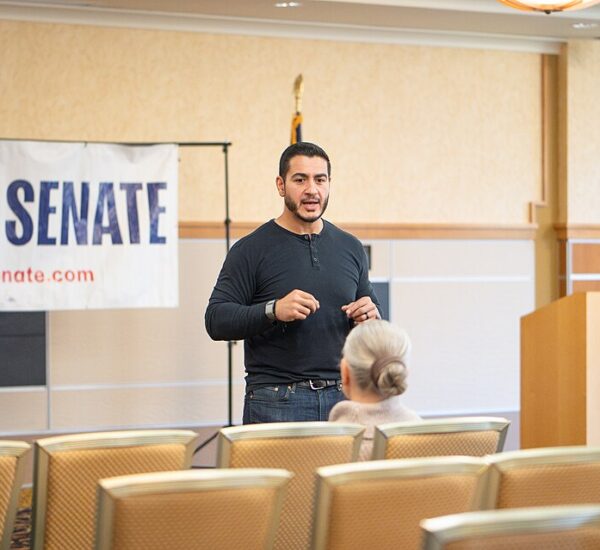
Hong entered the race amid increased attention on progressive candidates following victories elsewhere, including Abdul El-Sayed’s Democratic U.S. Senate primary victory in neighboring Michigan.
Crowley’s victory gives Democrats a nominee generally portrayed as more moderate than Hong.
Republicans, however, are already preparing to challenge that characterization.
GOP Looks to Tie Crowley to Progressive Policies
Steil argued that the political differences between Crowley and Hong are smaller than Democratic primary voters may have been led to believe.
He pointed to Crowley’s treatment of Hong’s policy positions during the primary campaign, arguing that Crowley failed to draw enough meaningful distinctions between himself and his progressive opponent.
Steil also suggested that Hong’s willingness to support Crowley in November demonstrates areas of agreement between the two Democrats.
Republicans are likely to make that argument repeatedly during the general election.
Their objective will be to prevent Crowley from positioning himself exclusively as a centrist while highlighting policies on which he shares common ground with Wisconsin progressives.
Crowley and Democrats are likely to push back strongly against that characterization and instead focus on his record as Milwaukee County executive.
That disagreement could become one of the defining battles of the campaign: Is Crowley a pragmatic moderate, or would his administration move Wisconsin further to the political left?
Voters will ultimately make that determination.
Pocketbook Issues Could Shape Wisconsin Governor Election
For many Wisconsin voters, however, political labels may matter less than their household finances.
The cost of groceries, housing, utilities, healthcare and transportation remains a major concern for families, particularly retirees and people living on fixed incomes.
That creates an opportunity for both campaigns.
Tiffany can make the case that conservative policies involving taxes, spending and regulation would improve Wisconsin’s economic climate.
Crowley, meanwhile, can argue that Democratic policies provide greater support for working families and essential public services.
The candidate who most effectively connects those competing philosophies to voters’ everyday financial concerns could gain a significant advantage.
For voters approaching retirement or already living on retirement income, questions surrounding taxes, healthcare costs, property expenses and inflation can be particularly consequential.
That makes Wisconsin’s 50-and-older electorate an important constituency to watch.
Taxes and Government Spending Could Take Center Stage
Republicans are also expected to emphasize fiscal policy.
Wisconsin has a long history of political battles involving taxes, government spending and the proper size of state government.
Tiffany can use that history to present himself as a candidate favoring fiscal restraint and limited government.
Republicans are likely to argue that controlling spending and reducing unnecessary regulation can help families and businesses keep more of their money.
Democrats will counter that state investments in infrastructure, education, healthcare and public programs provide economic benefits of their own.
Those competing visions give voters a clear policy debate heading into November.
Public Safety May Become Another Major Issue
Crime and public safety could also play an important role in the Wisconsin governor’s race.
Republican candidates nationally have frequently emphasized support for law enforcement, stronger prosecution and tougher approaches to repeat offenders.
Tiffany could use those themes to appeal to voters concerned about community safety.
Crowley’s record in Milwaukee County is likely to receive considerable scrutiny as Republicans examine his positions on policing, criminal justice and government spending.
Democrats, meanwhile, will have an opportunity to defend Crowley’s record and present their own proposals for improving public safety.
For voters, the important question will be which candidate offers the most credible plan for keeping Wisconsin communities safe while using taxpayer resources effectively.
Independent Voters Could Determine the Winner
Wisconsin’s closely divided electorate means neither Tiffany nor Crowley can rely entirely on partisan voters.
Independent voters could determine the outcome.
So could suburban residents, seniors and working-class voters who have shifted between Republicans and Democrats in previous elections.
That reality explains why Steil’s emphasis on “common sense” is strategically important.
Republicans want Tiffany to be viewed not simply as the Republican nominee but as the candidate offering practical solutions to everyday problems.
Democrats will attempt to do the same with Crowley.
The candidate who succeeds in occupying that middle ground without losing enthusiasm among core supporters could have the advantage.
Turnout Will Be Critical in November
Steil repeatedly emphasized another factor that could decide the election: turnout.
Wisconsin elections are frequently close enough that enthusiasm among each party’s base can determine the winner.
Republicans will need conservative voters to show up in large numbers while Tiffany competes for independents and persuadable Democrats.
Crowley faces a similar challenge.
After defeating Hong in a competitive primary, he must reunite Democratic voters while convincing moderates that his agenda represents the best direction for Wisconsin.
That makes the months ahead especially important.
Both campaigns now have an opportunity to define themselves — and their opponents — before less politically engaged voters begin paying close attention to the race.
Steil Says He Is Confident Tiffany Will Win
Steil believes Republicans are entering the general election from a strong position.
He expressed confidence that Tiffany can successfully contrast his agenda with Crowley’s and persuade Wisconsin voters that Republicans offer a better path forward.
Steil predicted that Tiffany will ultimately be elected Wisconsin’s next governor when voters cast their ballots in November.
The Democratic campaign will have other ideas.
With an open governor’s seat, a deeply divided electorate and national attention focused on Wisconsin, neither party can safely assume victory.
Why the Wisconsin Governor Race Matters
The outcome could have consequences extending well beyond the governor’s mansion.
Governors can influence taxes, spending priorities, education policy, infrastructure, economic development, public safety and numerous other issues affecting residents every day.
Wisconsin’s political importance also guarantees that national Republicans and Democrats will be watching closely.
A Tiffany victory would give Republicans control of the governor’s office after the Evers era and could reshape the direction of state government.
A Crowley victory would allow Democrats to maintain their hold on the governorship despite Evers’ retirement.
For Wisconsin voters, however, the decision will ultimately be much more personal.
They will be choosing between two different approaches to managing the state at a time when families remain focused on affordability, economic security, taxes, government accountability and the future of their communities.
And in a battleground state where elections can be decided by extremely narrow margins, every vote could matter.