
The mainstream media is making some major claims, here’s what Trump has to say about it.
The Trump administration is pushing back against reports suggesting the United States has significantly depleted its stockpile of advanced missiles following the recent conflict with Iran. President Donald Trump and Pentagon officials insist the U.S. military remains fully prepared for any global threat, dismissing reports of a weapons shortage as misleading.
The debate began after Reuters published a report citing unnamed sources familiar with internal U.S. military data. According to the report, the Army has used nearly all of its inventory of two of its premier long-range precision strike weapons during the five-month conflict with Iran. The report also said some defense officials worry the reduced inventories could make it more difficult to respond quickly to future crises involving nations such as China or Russia.
Trump Rejects Weapons Shortage Claims
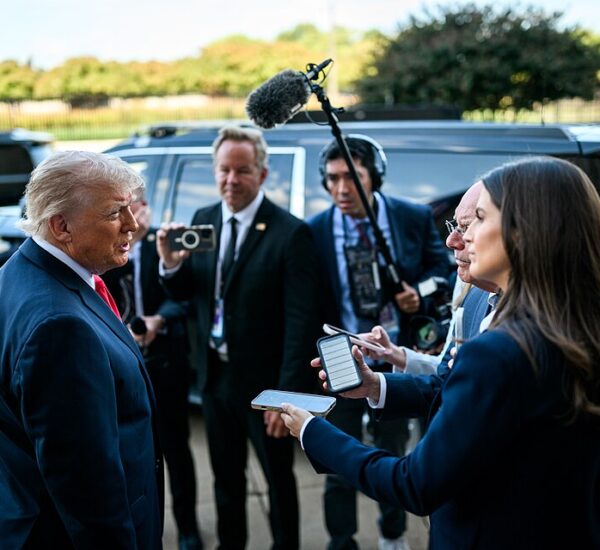
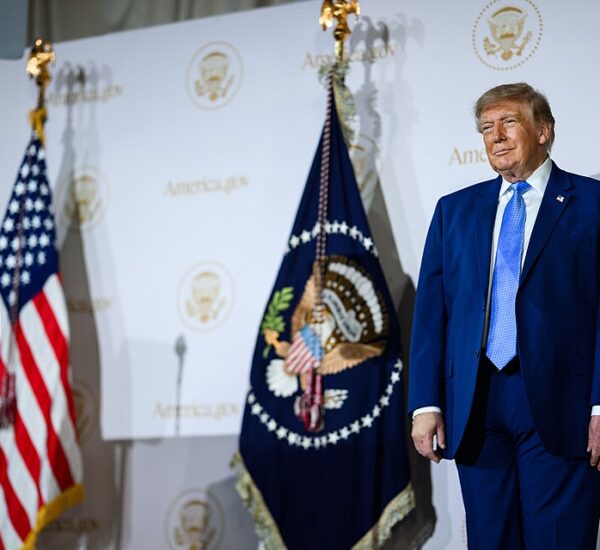
President Trump strongly disputed the report, arguing that America’s military remains unmatched in both capability and firepower.
In a statement provided to Fox News Digital, Trump said the United States possesses more munitions than any other nation and remains well-equipped to defend American interests around the world.
The president also criticized the Biden administration’s military aid policies, arguing that large quantities of weapons were transferred overseas before he returned to office. Trump said his administration is now rebuilding America’s military stockpiles while investing heavily in expanding domestic weapons production.
According to Trump, defense manufacturers are producing ammunition and advanced weapons at record levels, with factories increasing capacity to meet future demand.
Pentagon Says Military Remains Ready
The Department of Defense also rejected suggestions that America’s military readiness has been weakened.
Chief Pentagon spokesman Sean Parnell said the U.S. military continues to possess the capabilities needed to carry out operations anywhere in the world. He noted that American forces have successfully completed multiple missions across several regions while maintaining a strong arsenal to protect both the United States and its allies.
Because information about U.S. weapons inventories is classified for national security reasons, officials have not released exact figures regarding current stockpiles.
What the Reuters Report Claimed
According to Reuters, the conflict with Iran significantly reduced inventories of several important weapons systems beyond the Army’s long-range missiles.
The report stated that supplies of Patriot missile interceptors, THAAD missile defense interceptors, and Tomahawk cruise missiles have also declined during recent military operations.
Military planners have long warned that modern precision-guided weapons can be consumed much faster than they can be replaced. While many advanced missiles can be used within months during a major conflict, manufacturing replacements often takes years because of their complexity and limited production capacity.
Independent Analysts Raise Similar Concerns
Several independent defense experts have also suggested that recent military operations have placed pressure on America’s inventory of advanced weapons.
The Center for Strategic and International Studies recently estimated that roughly 65 percent of the U.S. inventory of Patriot missile interceptors has been used since fighting with Iran began. The organization also estimated that THAAD interceptor supplies have declined by approximately 38 percent based on publicly available budget data and open-source analysis.
Reuters reported that individuals familiar with internal military assessments said those independent estimates generally aligned with classified government data.
Even so, Pentagon officials continue to maintain that the United States has sufficient military resources to meet all current operational requirements.
Why These Weapons Matter
Among the weapons receiving the greatest attention are the Army Tactical Missile System, commonly known as ATACMS, and the newer Precision Strike Missile, or PrSM.
These advanced missiles allow U.S. forces to strike enemy targets hundreds of miles away with exceptional accuracy while reducing the risk to American pilots and ground forces.
Military planners consider these systems especially valuable because they can destroy command centers, air-defense installations, logistics hubs, and other high-value military targets located deep inside hostile territory.
Patriot and THAAD systems serve an entirely different mission.
Instead of attacking enemy positions, they protect American troops, military bases, and allied nations by intercepting incoming ballistic missiles before they reach their targets.
Tomahawk cruise missiles provide the U.S. Navy with another critical capability by allowing ships and submarines to conduct long-range precision strikes against enemy targets from hundreds of miles away.
Pentagon Focuses on Expanding Production
The discussion surrounding missile inventories comes as defense leaders continue emphasizing the importance of strengthening America’s defense industrial base.
Producing sophisticated precision-guided weapons requires specialized materials, highly trained workers, and advanced manufacturing facilities. As a result, expanding production often takes considerable time even after new funding is approved.
To address those challenges, military planners have increasingly emphasized combining expensive precision missiles with larger numbers of lower-cost drones and autonomous systems.
Officials believe this strategy would allow commanders to reserve high-end missiles for the most critical targets while relying on less expensive unmanned systems for surveillance, reconnaissance, electronic warfare, and certain strike missions.
However, defense leaders have repeatedly stated that drones cannot fully replace long-range precision missiles. Advanced missile systems remain essential for attacking hardened military installations and heavily defended targets that many smaller drones cannot reliably reach.
Trump Pushes Defense Industry to Increase Output
President Trump has met several times this year with executives from major U.S. defense contractors, urging companies to accelerate weapons production and expand manufacturing capacity.
Following one White House meeting earlier this year, Trump said defense companies agreed to significantly increase production of some of America’s most advanced weapons systems.
During additional meetings over the summer, the president continued pressing industry leaders to move faster, arguing that the United States produces the highest-quality military equipment in the world but must also ensure factories can quickly replenish inventories during extended conflicts.
Defense Budget Prioritizes Military Modernization
The administration’s proposed $1.5 trillion defense budget reflects those priorities.
The proposal includes increased funding for missile production, missile defense systems, Tomahawk cruise missiles, drones, autonomous technologies, and expanded manufacturing capacity for advanced munitions.
Supporters argue these investments are necessary to ensure the United States can sustain military operations while maintaining a strong deterrent against potential adversaries.
Critics, meanwhile, continue to debate whether current production levels are sufficient to keep pace with the demands of modern warfare.
The Bottom Line
The disagreement over U.S. missile inventories highlights a broader debate about military preparedness in an increasingly unstable world.
Reuters, citing unnamed sources, reported that recent combat operations have significantly reduced inventories of several advanced weapons systems. President Trump, the Pentagon, and other administration officials strongly dispute any suggestion that America’s military readiness has been compromised, arguing the United States continues to maintain overwhelming military strength while rapidly expanding weapons production.
Although the exact size of U.S. weapons stockpiles remains classified, the discussion has renewed attention on the challenges of sustaining advanced military capabilities during prolonged conflicts and ensuring America’s armed forces remain prepared for future threats around the globe.




Look for the MSM to make all kinds of claims to to cover up why they are so silent about Fauci. Fauci is the story that the MSM wants to bury. Why? Because they are complicit. They have covered for Fauci all of these years and pushed his agenda. A presidential pardon before ever even being charged OR convicted of anything an pleading the 5th 111 times at his hearing. He is guilty as he can be. This is not about Democrats vs. Republicans – the whole damned world wants to know the truth – lives could be hanging in the balance. Look at all of the “jabbed” who are now detoxing. They are not doing that because they think this is all a big conspiracy theory.
Another story being neglected by the MSM is that California has had 8473 earthquakes of at least a magnitude of 1.5 in the past 365 days. That is an average of 23 earthquakes a day. No matter how small they are – plates are shifting below. How long before something snaps like a rope that has been stretched too tight?
You could be right and it sure makes sense. Never did trust Fauci as he was always flip flopping.