
Here’s what happened.
The Trump administration’s immigration agenda has encountered another courtroom obstacle after a federal judge temporarily blocked its effort to end Temporary Protected Status (TPS) for Somalia.
The latest ruling comes just days after a federal appeals court sided with the administration in similar TPS disputes, setting the stage for another high-profile legal fight over immigration policy and executive authority.
On Friday, U.S. District Judge Allison Burroughs, an appointee of former President Barack Obama, issued an administrative stay that temporarily prevents the administration from ending Somalia’s TPS designation while the court reviews a newly amended lawsuit filed by African Communities Together and other advocacy groups.
The revised complaint argues the Trump administration violated the Fifth Amendment by allegedly ending Somalia’s TPS designation in a way that discriminated against Somali nationals based on race and national origin.
A New Legal Strategy
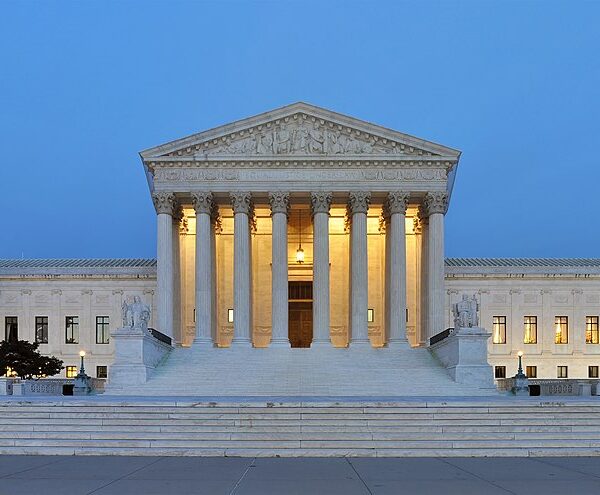
The plaintiffs filed their updated lawsuit after the U.S. Supreme Court’s June decision in Mullin v. Doe, which significantly limited the ability of lower courts to block TPS terminations based solely on statutory claims.
Rather than continue under the previous legal arguments, the plaintiffs rewrote their case to focus on constitutional issues, hoping the new claims would survive under the Supreme Court’s updated legal standard.
The timing is significant.
Only days earlier, the U.S. Court of Appeals for the First Circuit overturned similar lower court orders that had temporarily blocked the Trump administration from ending TPS protections for Ethiopia and South Sudan. Those rulings relied heavily on the Supreme Court’s decision, which narrowed the circumstances under which federal judges can halt TPS terminations.
Administration Allies Push Back
Judge Burroughs’ latest order quickly drew criticism from supporters of the Trump administration, who argue some lower courts continue finding ways to delay immigration policies despite recent guidance from higher courts.
Department of Homeland Security General Counsel James Percival sharply criticized the ruling in a post on X.
“Judge Allison Burroughs has once again issued an order blocking the administration from ending Somalia’s Temporary Protected Status. From our perspective, these cases follow the same pattern of delaying and obstructing the implementation of the law.”
Iowa Solicitor General Eric Wessan also questioned the court’s decision after reviewing the amended complaint.
According to Wessan, the judge temporarily invalidated the administration’s TPS decision while determining whether any of the plaintiffs’ constitutional claims justify a longer pause.
He argued that most of the lawsuit’s claims are already foreclosed by the Supreme Court’s Mullin decision and described the remaining constitutional argument as legally weak.
Wessan further contended that the ruling grants extraordinary relief before the plaintiffs have met the high legal standard typically required for emergency court intervention. He said he hopes the court ultimately lifts the administrative stay and allows the administration’s policy to proceed.
Plaintiffs Defend Their Case
The plaintiffs maintain that their revised lawsuit is fundamentally different from the cases recently rejected by the appeals court.
According to the amended complaint, the Department of Homeland Security had effectively decided to end Somalia’s TPS designation before completing the formal review process required under federal law.
As evidence, the lawsuit points to a November 2025 Truth Social post in which President Donald Trump announced that Somalia’s TPS designation would be terminated months before DHS completed its review.
The plaintiffs argue that sequence violated the Fifth Amendment’s guarantee of due process because the agency allegedly reached its decision before completing the legally required evaluation.
The lawsuit also claims the administration violated equal protection principles by allegedly targeting Somali nationals based on race and national origin. The complaint cites several public statements previously made by President Trump about Somali immigrants and argues those remarks demonstrate discriminatory intent behind the policy decision.
The Trump administration has consistently defended its immigration policies as lawful exercises of executive authority designed to strengthen border security and ensure that temporary immigration protections remain temporary rather than becoming permanent.
What Happens Next?
Judge Burroughs has overseen the Somalia TPS case since earlier this year. In March, she first issued an administrative stay that temporarily blocked the administration from ending Somalia’s TPS designation while the litigation continued.
Her latest order keeps those protections in place for now as the court reviews the newly amended constitutional claims.
The case is expected to continue through the federal court system and could become another significant legal test of how far lower courts may go in reviewing immigration decisions following the Supreme Court’s Mullin ruling.
With immigration expected to remain one of the most closely watched issues in Washington, the outcome could have broader implications for future efforts by the Trump administration to reshape U.S. immigration policy.


IMO, we have judges, most appointed by Obama, that practice politics, instead of our constitutional laws. If the judge is on the east coast, you can almost correctly predict the outcome.
how does one single judge get to overshadow the duly elected pres of the USA ?