
Trump is facing a major problem.
A growing disagreement between President Donald Trump and Senate Majority Leader John Thune is creating fresh challenges for Senate Republicans as Congress races toward its August recess.
With only a handful of legislative days remaining, GOP leaders must juggle government funding, high-profile nominations, national security legislation, and one of President Trump’s top priorities: advancing the SAVE America Act, a voter registration proposal focused on election integrity.
How Republicans handle these competing priorities could shape both the remainder of the legislative year and the political landscape heading into the midterm elections.
Trump Wants Election Security Front And Center
President Trump is urging the Senate to immediately approve a House-passed budget framework that would allow Republicans to move forward with another reconciliation package using a simple majority vote.
The proposal includes approximately $95 billion in funding for defense, intelligence operations, agriculture, and election-related initiatives.
At the center of Trump’s push is the SAVE America Act, legislation that would require proof of U.S. citizenship when registering to vote in federal elections.
Supporters argue the measure strengthens election security and public confidence in the voting process. Critics contend it could create new hurdles for eligible voters.
Despite clearing the House, the legislation has repeatedly stalled in the Senate.
Thune Focuses On Preventing A Government Shutdown
While Trump wants lawmakers focused on election legislation, Senate Majority Leader John Thune has taken a different approach.
His immediate priority is preventing a partial government shutdown before current funding expires later this year.
Thune has openly acknowledged that Republicans do not currently have enough votes to advance the House budget framework.
“As I’ve said before, you’ve got to get to 50 votes,” Thune recently told reporters. “I can’t count to 50 right now on a budget resolution.”
Instead, Thune is working toward a temporary bipartisan funding agreement that would keep the government operating into early December.
If those negotiations fail, Senate Republicans could revisit reconciliation as an alternative path.
Republican Divisions Complicate Trump’s Agenda
The challenge for Senate leadership isn’t coming only from Democrats.
Some Republican senators have also expressed concerns about combining the SAVE America Act with a larger budget package.
Retiring Sen. Thom Tillis has warned he would use Senate rules to slow legislation if the election measure is attached to reconciliation.
Those differences leave Republican leaders balancing pressure from the White House while trying to keep enough senators united to pass major legislation.
Trump Steps Up Pressure On Senate Republicans
President Trump has made it increasingly clear that he wants faster action from the Senate.
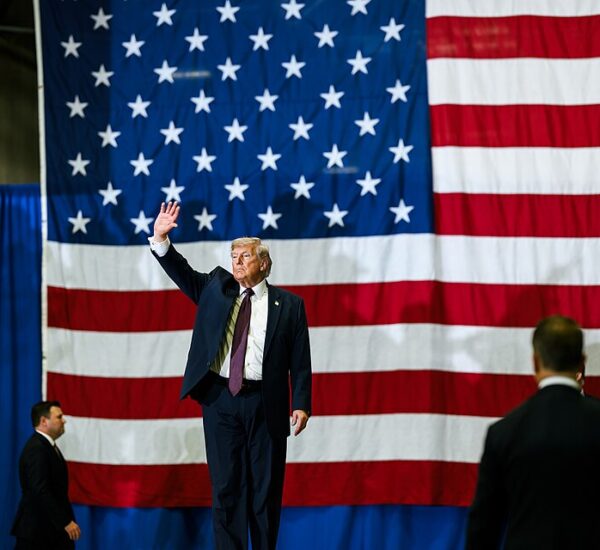
During a recent rally, he criticized the upper chamber for allowing House-passed legislation to stall.
White House Press Secretary Karoline Leavitt later said the president’s patience with the pace of Senate action is wearing thin.
Trump also praised House Republicans for approving the budget resolution and urged the Senate to pass it before lawmakers leave Washington for their August recess.
He called the proposal one of the most significant pieces of legislation under consideration and encouraged Senate Republicans to work alongside his administration to move it across the finish line.
Key Trump Nominees Face Important Votes
Even as lawmakers debate spending priorities, the Senate must consider several important Trump nominees.
Dr. Erica Schwartz, nominated to lead the Centers for Disease Control and Prevention (CDC), is expected to advance after securing support from key Republican senators.
Other nominations face a more uncertain future.
Sean Kaufman’s committee vote for a public health preparedness position was delayed after concerns about previous comments regarding vaccines.
Acting Attorney General Todd Blanche also faces close scrutiny.
Because Democrats are expected to oppose his nomination, Republican unity could determine whether he advances.
Several GOP senators continue seeking additional assurances from the Department of Justice before announcing their positions.
National Security Measures Also Await Action
Senate leaders are also working to renew important national security authorities that expired earlier this year.
Lawmakers are negotiating legislation to restore surveillance powers used to monitor foreign threats while also considering expanded sanctions targeting Russia and its allies.
President Trump has encouraged Congress to include additional sanctions on Iran, a proposal that appears to have broad support among Senate Republicans.
Busy Weeks Ahead For Senate Republicans
With Congress preparing to leave for its August recess, Senate Republicans face one of their busiest legislative calendars of the year.
Leaders must avoid a government shutdown, confirm presidential nominees, address national security priorities, and decide whether Trump’s election security agenda can advance before lawmakers leave Washington.
Whether Senate Republicans can bridge internal disagreements in the coming days may determine how much of President Trump’s legislative agenda moves forward before the fall campaign season begins.
The coming weeks are expected to provide a clearer picture of whether Senate Republicans can unite behind a common strategy—or whether disagreements over priorities will continue to slow progress on several of the party’s biggest goals.



Special Session Proclamation until they do what they need to do.