President Donald Trump’s latest trade policy is already facing a major legal challenge.
Just hours after the administration announced a new round of tariffs on imports from 60 foreign trading partners, two American small businesses filed a lawsuit arguing the president exceeded his legal authority by imposing the new import taxes.
The lawsuit, filed Friday in the U.S. Court of International Trade in New York, seeks to block the tariffs before they can remain in effect. The businesses argue that the administration failed to meet the legal requirements necessary to justify such sweeping trade restrictions.
At the center of the dispute are allegations that many of the targeted countries have not done enough to prevent the export of goods produced through forced labor. According to the lawsuit, the administration did not provide the detailed, country-specific findings required to support tariffs on such a broad group of trading partners.
The plaintiffs are represented by a nonprofit legal organization that successfully challenged earlier Trump tariff policies in court. Their attorneys argue the administration is once again attempting to impose broad tariffs that exceed the limits of presidential authority under federal law.
Earlier Friday, the Trump administration announced new tariffs ranging from 10% to 12.5% on imports from 60 trading partners, including the European Union. Administration officials said the move is designed to pressure foreign governments to take stronger action against the production and export of goods linked to forced labor.
The new tariffs took effect as a temporary 10% global tariff expired, allowing the administration to continue its aggressive trade strategy while pursuing negotiations with foreign governments.
Tariffs have remained one of President Trump’s signature economic policies. Throughout his presidency, Trump has argued that higher import taxes help level the playing field for American workers, strengthen domestic manufacturing, and give the United States greater leverage in trade negotiations.
Supporters say the strategy puts America’s interests first and encourages foreign nations to negotiate fairer trade agreements. Critics, however, argue the president has pushed the limits of executive authority in carrying out that agenda.
The latest lawsuit comes after several earlier legal battles over Trump’s use of tariffs.
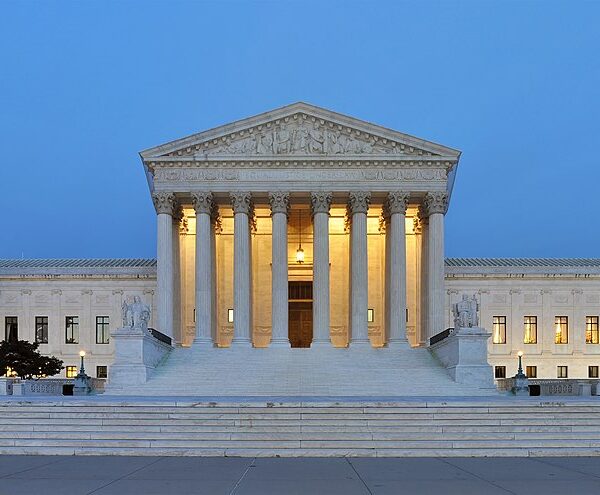
Earlier this year, the U.S. Supreme Court ruled that the International Emergency Economic Powers Act (IEEPA) does not authorize a president to impose broad tariffs on foreign trading partners without clear congressional approval. That decision invalidated many of the administration’s previous tariff actions.
Following the ruling, the Trump administration introduced a temporary global tariff under a different legal authority. That policy was later struck down by the U.S. Court of International Trade, although the administration has appealed the decision and continues to defend its trade policies in court.
Unlike those earlier cases, Friday’s tariffs were imposed under Section 301 of the Trade Act of 1974, a law that has long been used by presidents from both parties to respond to unfair or discriminatory trade practices by foreign governments.
Even so, the businesses behind the lawsuit argue that Section 301 has traditionally been applied to specific countries, industries, or trade disputes—not broad groups of nations through sweeping tariffs. They contend the administration’s latest approach represents an unprecedented expansion of presidential trade powers.
The case is expected to become another closely watched legal battle over the scope of executive authority and the future of U.S. trade policy.
For President Trump, whose America First agenda has consistently relied on tariffs as a key negotiating tool, the outcome could have significant implications for future trade actions. For businesses, manufacturers, and consumers, the court’s decision may also help determine how far future administrations can go in using tariffs to reshape America’s economic relationships with the rest of the world.