Republicans To Meet With Top Trump Official
House Republicans are preparing for a high-stakes classified briefing at the Pentagon as Congress considers one of the largest proposed increases in military spending in recent history. The meeting comes as President Donald Trump urges lawmakers to approve a sweeping $350 billion defense funding package aimed at strengthening America’s military during the ongoing conflict involving Iran.
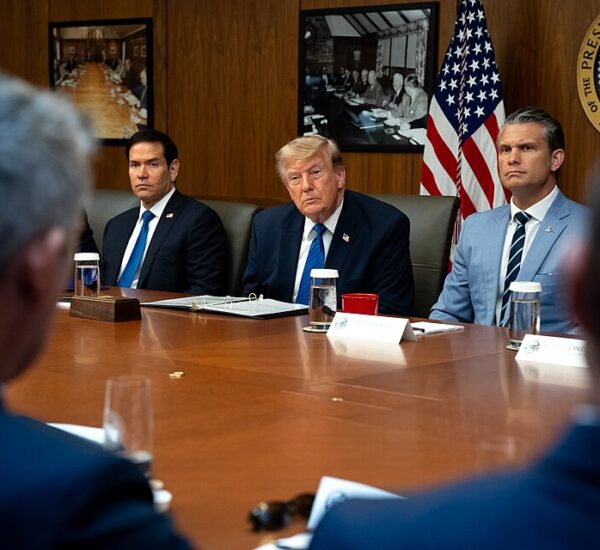
Speaker Mike Johnson (R-La.) confirmed that Republican lawmakers will meet Tuesday evening with Defense Secretary Pete Hegseth and senior Pentagon officials to review the administration’s national security strategy and discuss why the White House believes the additional funding is necessary.
The briefing comes at a critical moment as congressional Republicans finalize a third budget reconciliation package that would allow many of President Trump’s legislative priorities to pass the Senate with a simple majority, bypassing a Democratic filibuster.
House GOP leaders are expected to move the legislation through the House Budget Committee later this week.
Why House Republicans Are Meeting at the Pentagon
According to Johnson, much of the briefing will involve classified information that cannot be discussed publicly.
“Secretary Hegseth and his team will outline many of these issues, and much of the discussion will be classified,” Johnson told reporters Tuesday.
Johnson also defended President Trump’s proposal to dramatically increase defense spending, arguing that the United States faces serious threats both overseas and at home.
Johnson said President Trump has called for a dramatic increase in defense spending, arguing that the nation faces serious threats both at home and abroad. He said the United States must remain prepared to confront communist influences, terrorist organizations, and hostile regimes while ensuring the country’s national security remains strong.
Republicans have increasingly argued that strengthening America’s military is essential as global instability continues to grow.
Trump’s Defense Package Includes More Than Military Spending
The reconciliation bill is expected to combine a significant increase in Pentagon funding with several other Republican priorities.
Among the proposals are grants encouraging states to adopt voter identification requirements and other election security measures contained in President Trump’s Safeguard American Voter Eligibility (SAVE) America Act.
The legislation is also expected to include provisions aimed at reducing waste, fraud, and abuse in federal government programs, another long-standing Republican priority.
By combining several major initiatives into one package, GOP leaders hope to advance key parts of President Trump’s agenda through the budget reconciliation process.
White House Requests Additional $87 Billion Emergency Defense Package
Separate from the broader reconciliation legislation, the White House has also requested an $87 billion emergency defense supplemental.
Approximately $67 billion of that request would support military operations related to the ongoing conflict involving Iran.
The proposal also includes funding for public health efforts to combat the Ebola outbreak, along with financial assistance for American farmers.
Here’s How the Defense Funding Would Be Allocated
The emergency funding proposal includes:
- $21 billion for munitions and weapons production
- $17.3 billion for military operational costs
- $12.1 billion for classified national security programs
- $5.1 billion for cybersecurity and autonomous defense technologies
- $2.4 billion for drone capabilities
- $1.7 billion to improve Pentagon readiness
- $1.5 billion to offset higher fuel costs
- $1.2 billion for additional administration priorities
- $800 million to support National Guard operations
Supporters say the funding would replenish critical weapons stockpiles, improve military readiness, modernize U.S. defense capabilities, and ensure American forces remain prepared for future threats.
Senate Republicans Urge Democrats to Support Military Funding
While Republicans continue rallying support for the proposal, several Senate Democrats have questioned both the size of the supplemental request and the administration’s broader defense spending goals.
Sen. Dan Sullivan (R-Alaska) urged Democrats not to reject the funding package simply because it was proposed by the Trump administration.
Speaking during a Senate Armed Services Committee hearing, Sullivan emphasized that much of the supplemental funding is intended to replenish munitions and strengthen America’s military readiness.
He argued that Republicans supported national security funding during President Biden’s administration and said defense should remain a bipartisan issue regardless of political differences.
Sullivan also expressed disappointment at the prospect of Democrats opposing the supplemental request and related defense legislation.
Democrats Question Size of Proposed Defense Budget
Sen. Tim Kaine (D-Va.) said Democrats are carefully reviewing not only the emergency supplemental request but also President Trump’s broader proposal for a defense budget approaching $1.5 trillion.
If approved, the proposal would represent an increase of more than 40 percent compared to the previous year’s defense budget.
Kaine said lawmakers are evaluating whether such a large increase is justified, particularly since the supplemental funding would come on top of an already substantial increase in Pentagon spending.
Democrats have indicated they want additional details before deciding whether to support the proposal.
National Security Debate Expected to Intensify
The classified Pentagon briefing marks an important step as House Republicans prepare legislation that could reshape America’s defense strategy for years to come.
Supporters argue the funding is necessary to rebuild military readiness, strengthen national security, replenish weapons stockpiles, and prepare the United States for growing global threats.
Critics, however, continue to question the scale of the proposed spending increase and whether it is fiscally sustainable.
Congress is expected to debate both the reconciliation package and the emergency defense supplemental in the coming weeks, setting up one of the year’s most significant legislative battles over military funding, national security, election integrity, and federal spending.
With Republicans making defense and national security central pillars of President Trump’s agenda, the outcome of those debates could have far-reaching consequences for both the military and the federal budget in the years ahead.