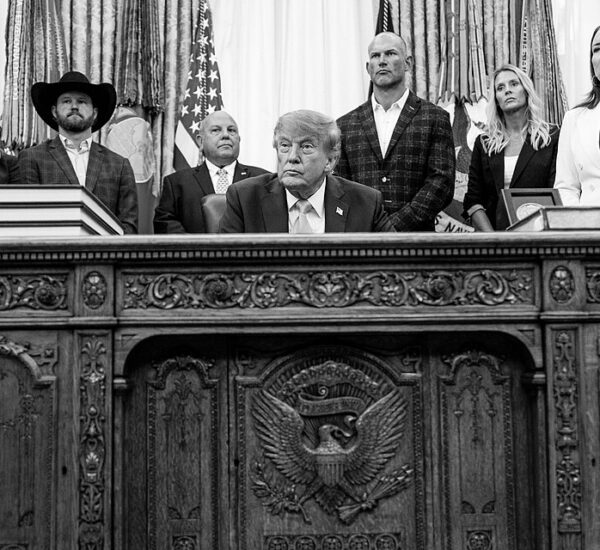
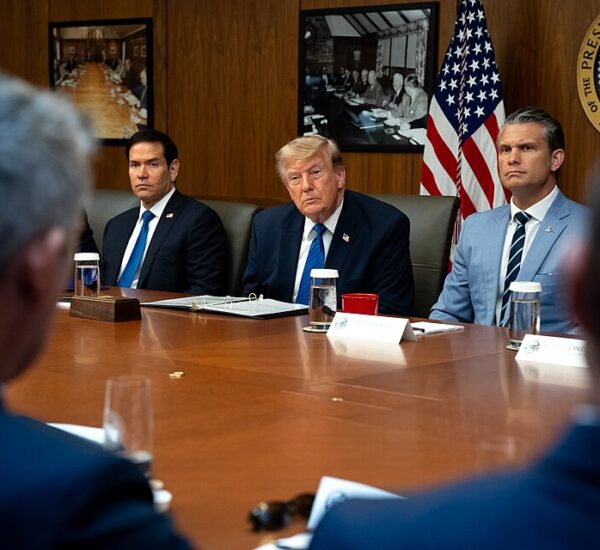
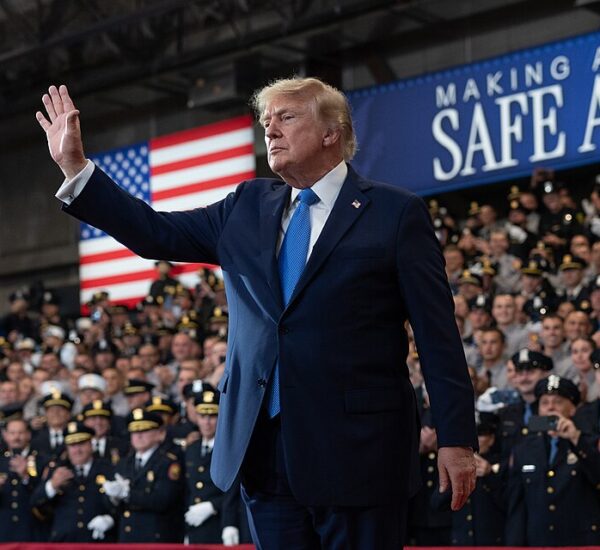
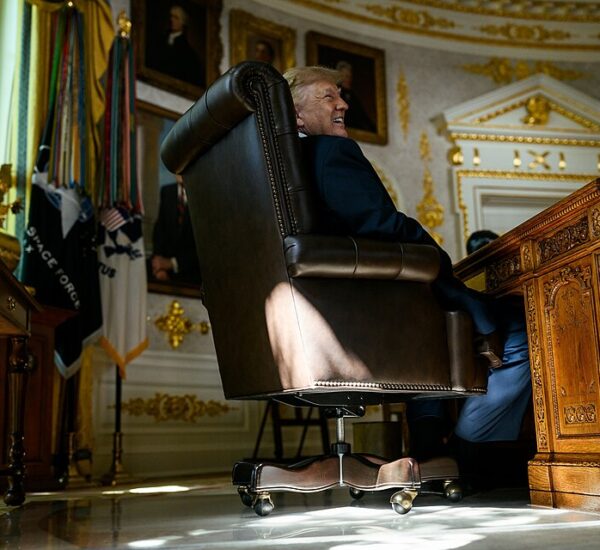
President Donald Trump is facing renewed media scrutiny after reports claimed he is upset over coverage of the new Air Force One, a retrofitted $400 million aircraft gifted by the Qatari government. The controversy intensified after questions were raised about why Trump did not use the aircraft to return from the NATO Summit in Turkey, placing the administration’s handling of the issue under fresh attention.
BACKGROUND
The scrutiny grew after The New York Times asked Trump why he was not taking the new aircraft home from the NATO Summit. Trump said the plane was being sent to military bases so it could be shown to soldiers, but the explanation prompted criticism from some who questioned the decision. CNN later reported, citing sources, that Trump was “fuming” over reporting about the aircraft’s alleged security flaws, while MS NOW’s Carol Leonnig reported that U.S. Secret Service sources described the president as “embarrassed” by the Air Force One story. On Friday, the Trump administration issued subpoenas to four New York Times reporters, a move the newspaper linked to its reporting on the aircraft’s alleged security flaws. Separately, according to MS NOW, FBI Director Kash Patel canceled a planned trip to Chicago and instead went to the White House as questions continued about his taxpayer-funded travel.
Housing Bill Becomes Law Without Trump’s Signature
President Donald Trump allowed a bipartisan housing bill to become law early Saturday without signing it, using the moment to highlight his ongoing push for stronger election security and voter identification requirements.
Rather than approve the legislation, Trump chose to protest what he described as the Senate’s failure to advance the SAVE America Act, a proposal that would require proof of U.S. citizenship when registering to vote and photo identification when casting a ballot.
Although the president withheld his signature, the housing measure still became law under the U.S. Constitution after the required 10-day review period expired without a veto.
Housing Bill Takes Effect Automatically
The legislation, known as the 21st Century ROAD to Housing Act, received broad bipartisan support in both the House and Senate.
The bill aims to address America’s housing affordability challenges by encouraging the construction of additional homes, reducing regulatory barriers, and placing restrictions on large institutional investors purchasing certain single-family homes. Supporters argue the measure could help increase housing supply and improve affordability for middle-class families.
Trump had been expected to sign the bill during a White House ceremony last month. However, the event was canceled shortly before it was scheduled to begin as the president shifted his attention to election reform.
Trump Makes Election Security His Priority
On Friday, Trump explained his decision in a Truth Social post, saying he would not sign the housing legislation while the Senate continued to delay action on the SAVE America Act.
The president argued that protecting election integrity remains one of his administration’s highest priorities and urged lawmakers to move forward with voter identification legislation.
Supporters of the proposal say requiring proof of citizenship and photo identification would strengthen public confidence in U.S. elections and help ensure that only eligible American citizens cast ballots.
Opponents argue the additional requirements could make voting more difficult for some eligible voters.
Constitution Allowed Bill to Become Law
Even without Trump’s signature, the legislation still took effect.
Under Article I, Section 7 of the U.S. Constitution, legislation passed by both chambers of Congress automatically becomes law if the president neither signs nor vetoes it within 10 days, excluding Sundays.
House Speaker Mike Johnson (R-La.) formally sent the bill to the White House on June 29. When the constitutional deadline expired at midnight Saturday, the measure officially became law.
Trump’s refusal to sign the legislation therefore served primarily as a political statement rather than a legal obstacle.
Democrats Criticize Trump’s Decision
Democrats quickly criticized the president’s move.
Sen. Elizabeth Warren (D-Mass.), one of the Senate’s leading supporters of the housing package, accused Trump of delaying legislation designed to reduce housing costs for American families.
Warren argued the bill focused on expanding housing opportunities and lowering costs, while questioning why the president chose not to sign it after Congress had already approved it.
Election Reform Debate Continues
The dispute underscores how election security remains one of the defining issues in Washington.
Republicans continue to advocate for voter identification requirements and proof of citizenship for voter registration, arguing such safeguards are necessary to protect election integrity and strengthen confidence in the voting process.
Democrats have largely opposed those proposals, arguing existing election safeguards are sufficient and expressing concerns that additional requirements could create barriers for some voters.
While the housing bill has now officially become law, the political battle over election reform appears far from over. With Congress expected to revisit voting legislation in the coming months, the debate over voter ID and election security is likely to remain a central issue heading into future elections.