Are negotiations off the table now?
The United States launched military strikes against Iranian targets Tuesday after Tehran was accused of targeting multiple commercial vessels traveling through the Strait of Hormuz, one of the world’s most important shipping routes.
According to U.S. Central Command (CENTCOM), the operation was ordered after three commercial ships reportedly came under attack within a 24-hour period. American officials said the incidents violated the terms of a ceasefire framework established under the U.S.-Iran memorandum of understanding.
U.S. Responds To Shipping Attacks
CENTCOM announced that American forces had begun what it described as a series of “powerful strikes” designed to deter further attacks on civilian shipping and protect freedom of navigation in international waters.
Military officials said the operation specifically targeted Iranian military assets believed to be connected to recent maritime aggression.
The command stated that the United States acted after Iran allegedly targeted three commercial vessels transiting the Strait of Hormuz, calling the incidents dangerous and inconsistent with previous commitments made by Tehran.
Explosions Reported Inside Iran
Iranian state media reported explosions near the southern port city of Sirik as well as on Qeshm Island shortly after the U.S. operation began.
While Iranian officials did not immediately release details about the damage, multiple reports indicated military activity in both locations.
The strikes follow similar U.S. operations conducted late last month after Iran allegedly launched drones against a commercial cargo ship in the same region.
During those earlier operations, American aircraft struck drone storage facilities and coastal radar installations that U.S. officials said supported Iranian military operations.
Strait Of Hormuz Remains A Global Flashpoint
The Strait of Hormuz is one of the world’s busiest energy corridors, carrying a significant share of global oil exports every day.
Because of its strategic importance, any disruption to shipping through the waterway can affect international energy markets, shipping costs and global trade.
American officials argue that maintaining safe passage through the strait remains a vital national security interest.
Sanctions Tightened As Tensions Grow
Tuesday’s military action came only hours after Washington revoked a sanctions waiver that had previously allowed limited Iranian oil exports under the memorandum of understanding.
Under that agreement, Iran had pledged to keep the Strait of Hormuz open and refrain from interfering with commercial shipping.
According to U.S. officials, those commitments were not honored.
Officials said Iranian forces allegedly fired upon a Qatar-flagged tanker Tuesday after separate incidents involving vessels associated with the United Arab Emirates and Saudi Arabia the previous evening.
Those incidents reportedly caused damage and onboard fires but no immediate reports of civilian casualties.
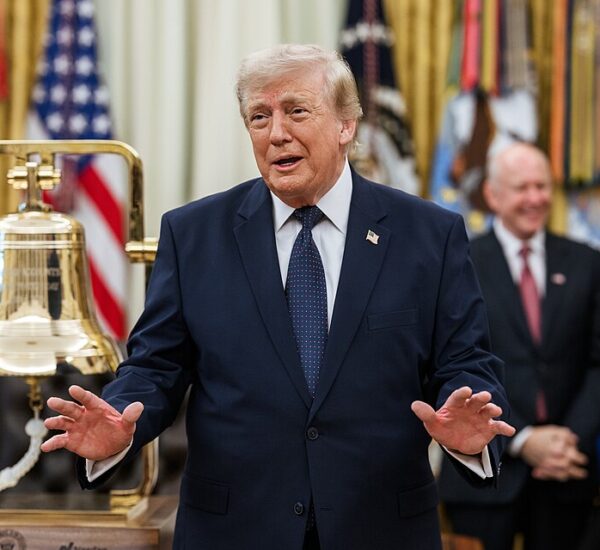
One U.S. official told The New York Post that Iran’s actions would not go unanswered while emphasizing that diplomatic efforts remain active.
Officials said negotiations toward a broader agreement with Tehran are continuing despite the latest escalation.
Trump Addresses Allies At NATO Summit
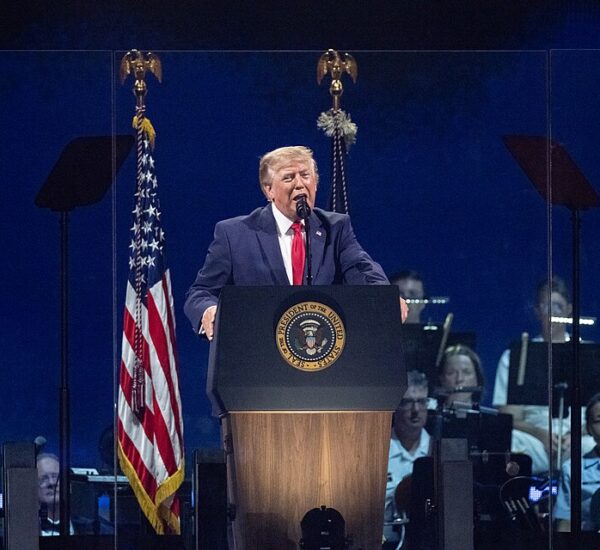
The military operation unfolded while President Donald Trump attended a NATO summit in Turkey.
During the gathering, Trump praised Turkey for assisting efforts related to the regional crisis while criticizing several European allies—including the United Kingdom, Germany, France and Italy—for declining to provide military basing support during operations involving Iran.
The latest developments highlight the fragile security situation in the Middle East and underscore the continuing importance of protecting international shipping lanes that are critical to the global economy.