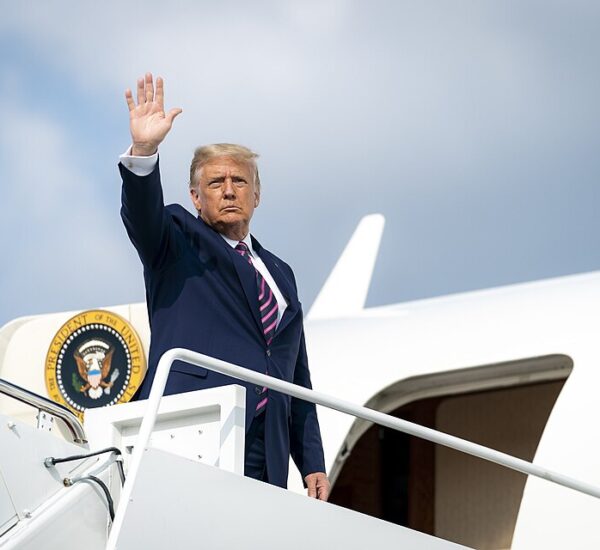
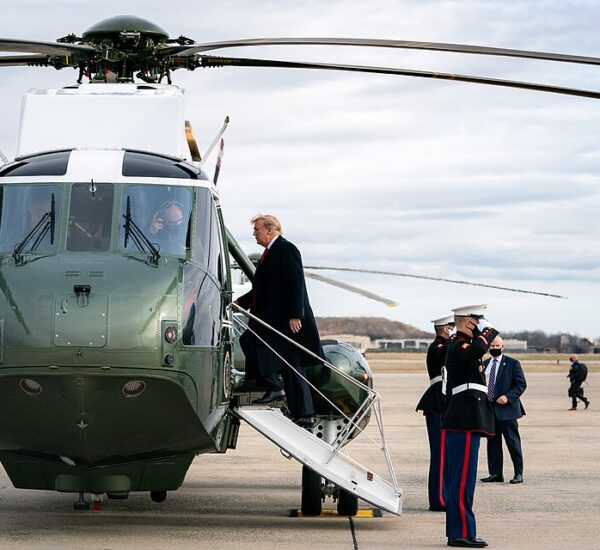
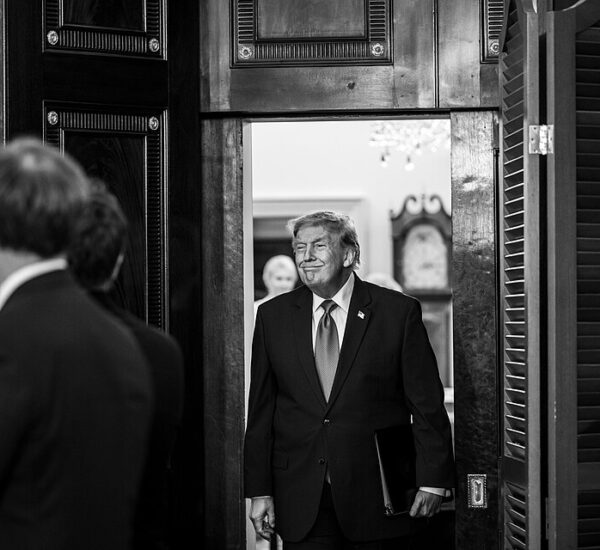
President Donald Trump said in an interview with an Italian news outlet that Italian Prime Minister Giorgia Meloni “begged” him for a photo during the recent G7 summit. The comments prompted a strong response from Meloni and Italian diplomats, who pushed back against his account of the interaction.
Before the recent strain over Iran and broader Middle East tensions, Meloni had been widely viewed as one of Trump’s stronger international allies. She even attended his 2025 presidential inauguration, where she was the only European leader present. In his remarks, Trump said, “She wanted a picture with me so badly. I wouldn’t have taken it, but I felt sorry for her,” adding that he spoke with her and suggesting she was pleased about the exchange. Tensions between the two leaders have since emerged as Meloni has recently distanced herself from the United States amid domestic and political pressure tied to the escalating conflict.
Democrat Governor Accused Of Stolen Valor
Questions surrounding Maryland Governor Wes Moore’s military record are once again drawing attention, with a retired Army officer urging the Democrat to release all relevant documents and put the controversy to rest.
The dispute centers on Moore’s past claims regarding military honors and the timeline surrounding a Bronze Star that was awarded nearly two decades after his deployment to Afghanistan.
Retired U.S. Army Colonel Dan Sullins says the governor could quickly end the speculation by making his complete military personnel file public.
“I would release everything,” Sullins said. “Release it all and let people make up their own minds.”
The controversy dates back to a 2006 application Moore submitted for a White House fellowship. Records later reviewed by journalists indicated that at the time of the application, Moore had not yet officially received either a Combat Action Badge or a Bronze Star, despite references suggesting otherwise.
Moore eventually received the Combat Action Badge later in 2006 for actions connected to his Afghanistan service.
The Bronze Star, however, remains the central focus of the debate.
According to published reports, Moore did not receive the award until December 2024—approximately 18 years after returning from deployment. Critics argue that such a lengthy delay raises legitimate questions about how the award was approved and whether the process followed normal military procedures.
Sullins has spent months reviewing military records, public statements, and documents obtained through Freedom of Information Act requests.
His investigation seeks to reconcile differences between Moore’s public accounts and official military records.
One of the key questions involves why the Bronze Star was pursued so many years after Moore’s service ended.
“We specifically asked why it became important after 18 years,” Sullins said.
The retired Army officer also wants clarification about the review process itself and whether Moore received access or assistance that would not typically be available to ordinary veterans seeking retroactive military recognition.
According to Sullins, the award moved through the approval process unusually quickly compared to what many veterans experience.
He says repeated requests for answers have gone unanswered.
The disagreement has evolved into a broader debate over transparency and public accountability.
Moore has consistently defended the accuracy of his military service record and has rejected allegations that he intentionally misrepresented his achievements.
At the same time, his administration has resisted calls to release additional documentation.
Governor Moore’s office argues that many of the requested records contain sensitive personal information, including private medical details that should not be publicly disclosed.
Press Secretary Ammar Moussa recently criticized ongoing records requests, describing them as an effort to create controversy through speculation rather than facts.
Supporters of the governor maintain that Moore’s military service should be respected and that critics are attempting to turn a paperwork dispute into a political issue.
Sullins rejects that characterization.
A former television journalist who later served in the U.S. Army for three decades, he says his investigation is focused entirely on establishing facts and providing the public with accurate information.
“I stand by our work,” Sullins said, adding that he has never been affiliated with a political party.
For many observers, the issue now comes down to transparency.
Critics argue that releasing the complete military file would allow veterans, journalists, and voters to review the facts independently and draw their own conclusions.
Until that happens, questions surrounding the governor’s military record, the timing of his Bronze Star award, and the process that led to its approval are likely to remain part of the public conversation.
As scrutiny continues to grow, pressure is mounting on Maryland’s governor to provide a full accounting and bring closure to a controversy that shows little sign of disappearing.