Trump’s New Message To NATO
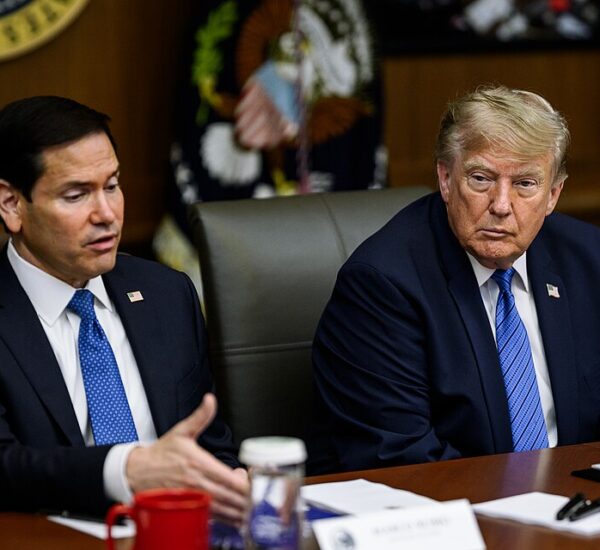
President Donald Trump’s America-First foreign policy is once again reshaping NATO, as Secretary of State Marco Rubio delivered a blunt warning to European allies: the days of unlimited American military protection are coming to an end.
During a tense NATO meeting in Helsingborg, Sweden, Rubio confirmed that the United States is preparing to reduce and restructure parts of its military presence across Europe — a move many conservatives argue is long overdue after decades of American taxpayers carrying the burden for wealthy European nations.
The warning comes ahead of NATO’s upcoming summit in Ankara, where alliance leaders are expected to face growing pressure from President Donald Trump to dramatically increase defense spending and take greater responsibility for Europe’s own security.
Trump Pushes NATO Toward a New Era
The Trump administration has sent mixed signals in recent weeks, leaving some European governments scrambling to understand Washington’s next move.
Earlier this month, reports surfaced that the United States planned to remove roughly 5,000 troops from Germany following rising tensions between Trump and German Chancellor Friedrich Merz.
Then came another surprise announcement: Trump revealed plans to deploy 5,000 U.S. troops to Poland instead — a move many viewed as a major strategic shift toward Eastern Europe and a stronger deterrent against Russia.
The sudden changes sparked confusion among NATO officials.
Swedish Foreign Minister Maria Malmer Stenergard admitted the situation has become difficult for allies to navigate, highlighting growing uncertainty inside the alliance.
Still, Rubio made it clear that Europe should not be shocked by the changes.
“It is well understood within NATO that America’s troop presence in Europe will be adjusted,” Rubio told reporters after the meeting.
According to Rubio, discussions about restructuring U.S. forces have been underway for some time and have been coordinated with NATO allies behind closed doors.
Europe Faces Pressure to Defend Itself
Many European leaders now recognize that President Trump is serious about forcing NATO countries to pay more and rely less on American military power.
For years, conservatives have criticized NATO members for failing to meet defense spending commitments while depending heavily on U.S. protection.
Now, Europe appears to be racing to catch up.
Norwegian Foreign Minister Espen Barth Eide acknowledged that American troop reductions were widely expected as Washington shifts focus toward emerging global threats.
He emphasized that any drawdown must happen carefully so European nations can strengthen their own military capabilities in time.
Meanwhile, NATO Secretary General Mark Rutte is urging member nations to rapidly increase military spending ahead of the Ankara summit.
Several European governments are reportedly preparing new arms deals and defense investments aimed at proving to Trump that Europe is finally taking security seriously.
Iran Conflict Adds New Pressure on NATO
The NATO meeting also took place against the backdrop of growing instability in the Middle East.
President Trump recently criticized several European allies for refusing to provide stronger support during America’s military operations involving Iran.
At one point, Trump even suggested the United States could reconsider its commitment to NATO altogether if allies continue failing to pull their weight.
Rubio acknowledged the president’s frustration, saying Trump remains deeply disappointed by the response from some NATO countries during the conflict.
As tensions continue near the Strait of Hormuz, several European nations have already started repositioning naval assets closer to the region to help secure critical shipping routes.
Rubio also warned that NATO countries may eventually need a backup strategy if instability in the Middle East worsens.
“I don’t know if that would officially become a NATO mission,” Rubio said, “but NATO countries would likely be involved.”
NATO Summit in Ankara Could Become a Turning Point
NATO leaders had hoped the upcoming summit in Ankara would focus primarily on rising defense budgets and renewed alliance unity.
Instead, growing fallout from the Iran conflict and uncertainty surrounding America’s future military role in Europe are threatening to dominate discussions.
Despite the tensions, European leaders are increasingly signaling a willingness to strengthen their militaries after years of underinvestment.
French Foreign Minister Jean-Noel Barrot said the alliance must begin “Europeanizing NATO,” giving Europe a larger leadership role inside the organization.
At the same time, NATO remains heavily focused on the war in Ukraine. Ukrainian President Volodymyr Zelenskyy is expected to attend the Ankara summit as alliance members debate future military aid and how to distribute the financial burden more evenly among member nations.
Behind the scenes, NATO officials are reportedly working to finalize major defense agreements before the summit begins — all part of an effort to convince President Trump that Europe is finally prepared to step up after years of relying heavily on American taxpayers and military strength.
For many conservatives, the message from the Trump administration is simple: America will stand by its allies, but the era of Europe depending almost entirely on the United States for defense may finally be coming to an end.